


Stay updated with the latest - Click here to follow us on Instagram

Journalism of Courage
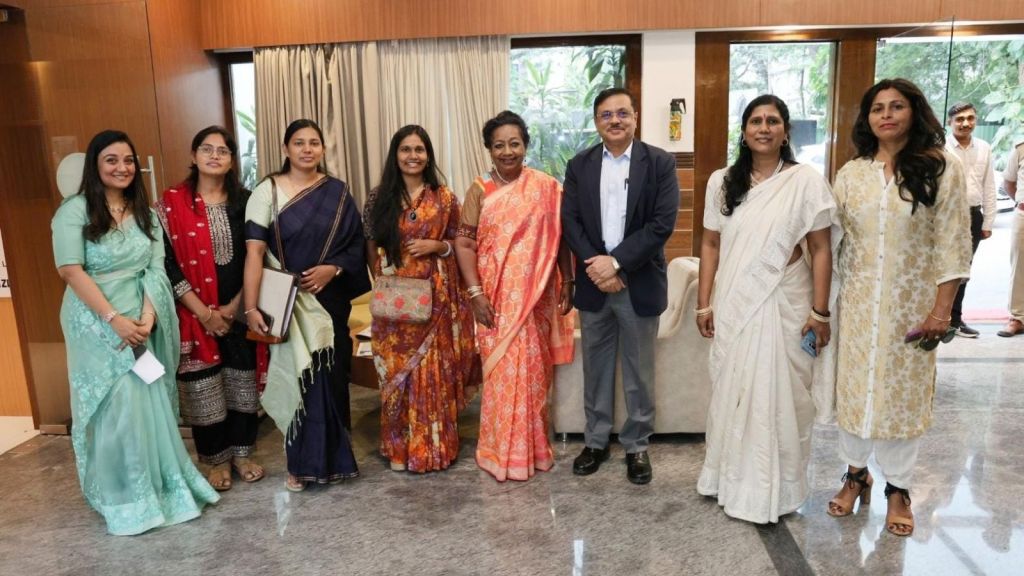 The first day of the two-day National Women’s Conference brought together police officers, lawyers, researchers and technology companies to examine the full chain of response to crimes against women. (Express Photo)
Technology may help the police identify and respond to risks faster, but gaps in reporting, investigation, prosecution and institutional support remain key challenges to women’s safety, speakers said at a national conference in Bengaluru Thursday.
The first day of the two-day National Women’s Conference brought together police officers, lawyers, researchers and technology companies to examine the full chain of response to crimes against women — from preventing offences and improving emergency response to protecting victims and witnesses, strengthening prosecutions, and ensuring safer working conditions for women police personnel.
The third edition of the conference, themed “Gandhiji Revisited: Women’s Safety & Security in Free India — Deepening Sensitivities”, was held at the Senior Police Officers Training and Research Centre in Bengaluru.
From reporting to conviction
A key panel examined what happens after a crime is reported, focusing on the gap between registration of cases, investigation, and eventual conviction. Speakers pointed to victim and witness protection, lack of awareness, and gaps in coordination between agencies as continuing challenges.
Public Prosecutor Shailaja Nayak said police file charge sheets in nearly 75-85 per cent of cases, but the conviction rate during trial is often only 15-20 per cent. Citing her experience, Nayak said she had handled around 60 sexual assault cases, of which only three ended in conviction, two lapsed, and the remaining cases were still on trial.
She said victims can face pressure during the legal process and stressed the need for measures to protect survivors while balancing those safeguards with the right to freedom of speech.
Lawyer Pratima Jagadeesh said the challenge was not necessarily the absence of laws, but limited awareness of them and poor coordination between departments.
“The law exists, but awareness does not,” she said, calling for greater institutional integration.
Anjali Ramanna, a lawyer specialising in women and minor rights, said violence against women cuts across professional and social backgrounds. Responding to a question on whether women feel safer because they are more empowered or because society itself has become safer, the founder of Astitva Legal Trust said 13 of the 18 dowry-harassment cases handled by her organisation involved IT employees.
During a separate discussion on police reforms for women’s safety and security, S Savitha, Additional Commandant General, Home Guards, presented data on crimes against women in Karnataka. Molestation was the highest among the major categories cited, followed by cruelty by spouse, violations under the Dowry Prohibition Act, rape and dowry deaths.
Taken together, the discussions pointed to the need to strengthen the entire response chain — from prevention and reporting to investigation, prosecution and protection of victims and witnesses.
The women policing women’s safety
The conference also turned inward, with women police personnel raising concerns about their working conditions.
They spoke about access to basic facilities, dedicated restrooms, safe transport during night duty, periodic health check-ups, mental health support, and protective equipment. Concerns were also raised about harassment faced by women personnel while handling public-order situations and within police stations.
“Women police personnel from the constable to inspector level are the first responders and the last-mile link between the police department and the public. Therefore, the issues they face in the field, including the need for restrooms, transport during night shifts, health check-ups, mental health support and safety at their workplaces, need to be addressed institutionally. If we want them to respond effectively to women’s grievances, we also have to ensure that they have a safe and supportive working environment,” retired DGP Raghavendra H Auradkar said.
Responding to the concerns, Bengaluru Police Commissioner Seemant Kumar Singh said several measures, including mental health counselling, mobile toilets and health check-ups, were already in place, while the remaining concerns would be examined.
Karnataka Police officers also highlighted preventive and emergency-response mechanisms, including the 112 emergency response system, technology-enabled policing platforms and initiatives such as Akka Pade aimed at improving women’s access to assistance and protection.
Bengaluru Police officers also spoke about strengthening welfare and counselling mechanisms for women personnel.
Technology can help, but is not the whole answer
A significant part of the discussions focused on using technology to make policing more preventive. Startups and researchers presented emergency alert systems, wearable devices, missing-person tracking tools, drones, surveillance technologies, and other solutions that could assist police personnel on the ground.
The presentations explored how these tools could be adapted for policing and potentially developed through collaboration between technology companies, police departments and other stakeholders.
But speakers also stressed that technology alone cannot address gaps in women’s safety. They identified better infrastructure, faster emergency response, coordination between agencies, and stronger support systems for women personnel as equally important.
Senior police officers, including Karnataka Director General and Inspector General of Police M A Saleem, Criminal Investigation Department DGP Pronab Mohanty, Seemant Kumar Singh, Raghavendra H Auradkar, and Jija Madhavan Harisingh, along with legal experts, researchers, and technology-sector representatives, attended the conference”s first day.
Stay updated with the latest - Click here to follow us on Instagram