5 min readBengaluruMar 5, 2023 08:00 AM IST
First published on: Mar 5, 2023 at 08:00 AM IST
As Bengaluru grows outwards and upwards, the green spaces of the city remain a timeless reminder of the city as it once was, especially to those residents who were here before the hustle and bustle of today’s IT hub. The prominent among these green spaces is the botanical garden of Lal Bagh. But far from only being a garden, Lal Bagh is a historical site, spanning the eras of Kempe Gowda, Tipu Sultan, and colonial British rule.
The oldest section of the park is fittingly located on a formation of ancient peninsular gneiss rock, about 3 billion years old, which by itself is a National Geological Monument. It is capped by one of the four towers that were erected by 16th-century ruler Kempe Gowda II to mark the boundaries of Bengaluru and observe the surrounding terrain. Older relics, such as a Vijayanagara-era hero stone, also hint at an even older past. It is not entirely certain where the name ‘Lal Bagh’ itself comes from – with tales ranging from the red soil prevalent in the area to Tipu coming across red flowers in the gardens as a child.
 Peninsular Gneiss, a metamorphic rocks dating back to 3,000 million years and a watchtower built by Bengaluru’s ‘founder’ Kempe Gowda (Express photo by Jithendra M).
The roots of modern Lal Bagh, however, can be attributed to Hyder Ali and Tipu Sultan’s love of greenery, with trees being brought from across the world. According to the Indian National Trust for Culture and Heritage (INTACH), the garden of Hyder Ali’s time likely came up around 1760 to the north of the tank in Lal Bagh, and by 1791, would have been laid out in the ‘char-bagh’ Persian style which was also in vogue with the Mughals, and would have been replicated at similar gardens in Srirangapatna, Mandya district.
Some trees from the era still survive; notably an immense white silk-cotton tree that is impossible to miss. But according to INTACH, this would not have been part of the plot structure of the gardens at the time. Eventually, the garden fell into British hands after Tipu’s fall. It is likely that the garden saw some of those final days, with a gun battery deployed by the Mysore troops at one point in the area.
Statue of Chamaraja Wodeyar (Express photo by Jithendra M).
Governor-General Wellesley had appropriated the garden in 1800, but shortly after, the management by the state ceased and by 1814 it was in the hands of one Major Gilbert Waugh, who turned out to have a green thumb himself. The garden passed through many hands in the intervening years until 1856, when a formal proposal to set up a botanical garden bore fruit. Lal Bagh grew in the intervening years with superintendents such as John Cameron expanding the garden and bringing in new varieties of plants.
Walking through Lal Bagh today, visitors can still see the echoes of the colonial era. The most iconic of these is the Glass House, inspired by its far larger counterpart in Hyde Park, the Crystal Palace, in London. It was inaugurated in 1889 at Lal Bagh by Prince Albert Edward, a grandson of Queen Victoria who was second in line to the throne at the time, at a party hosted by King Chamaraja Wodeyar (A horseback statue of Chamaraja Wodeyar can also be seen not far from the Glass House.)
Glass House (Express photo by Jithendra M).
The Glass House was built by a Glaswegian company entirely out of glass and iron. A bandstand from the mid-1860s may also be found nearby. The vicinity of the Glass Palace, besides hosting flower shows around Republic and Independence Day, is also home to trees planted by a host of dignitaries ranging from India’s first prime minister Jawaharlal Nehru to Queen Elizabeth.
Not far from Kempe Gowda tower, a British dovecote in good condition dating back to 1893 can also be found; although the present-day pigeons seem to be far more interested in the grains scattered around for them.
Several other colonial structures have not fared as well. One of these is a circular building that originally served as an aviary and later an aquarium, about 150 years old, not far from the statue of King Chamaraja, and is currently in a dilapidated condition. Another casualty of time is Krumbiegel Hall, which once stood not far from the aquarium. It takes its name from Gustav Krumbiegel, the German horticulturist and architect who headed Cubbon Park and Lal Bagh in 1908. The hall was razed in 2017 after it began to collapse.
Lal Bagh (Express Photo by Jithendra M)
However, the MC Marigowda Memorial Horticultural Library has stood the test of time. Dating back to 1858, it was originally a cottage to house the superintendents of the garden.
Apart from the verdant surroundings and colonial architecture, bird lovers are also likely to have multiple opportunities for interesting sightings – from waterbirds at the lake to the occasional bird of prey cleaning itself in a lawn sprinkler. The garden is open on all days. There is an entry fee of Rs 30 for an adult and Rs 10 for children.

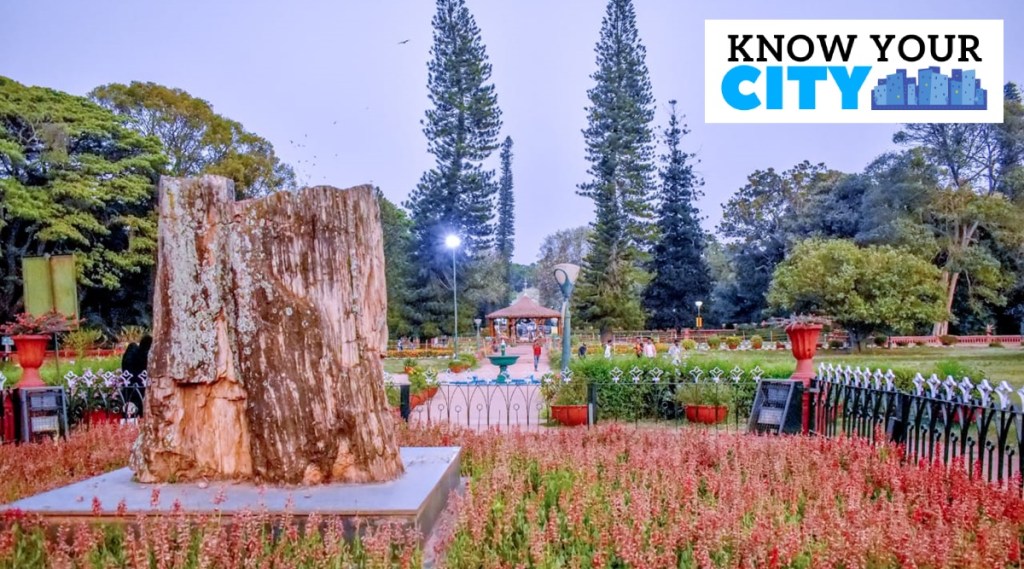 The tree fossil is a collection from the national fossil park, Thruvakkarai, South Arcot, Tamilnadu. It is supposed to be 20 million years old. (Express photo by Jithendra M.)

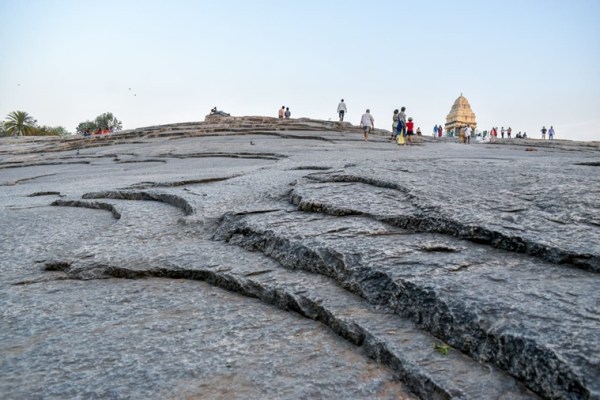 Peninsular Gneiss, a metamorphic rocks dating back to 3,000 million years and a watchtower built by Bengaluru’s ‘founder’ Kempe Gowda (Express photo by Jithendra M).
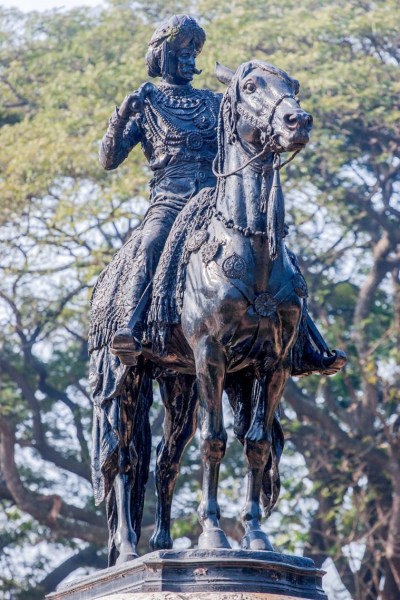 Statue of Chamaraja Wodeyar (Express photo by Jithendra M).
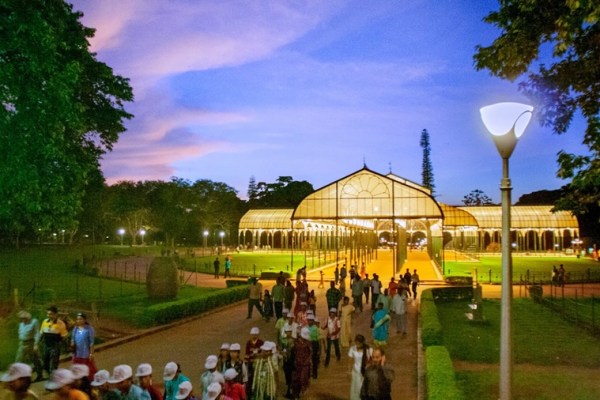 Glass House (Express photo by Jithendra M).
 Lal Bagh (Express Photo by Jithendra M)
 Share


