


Stay updated with the latest - Click here to follow us on Instagram

Journalism of Courage
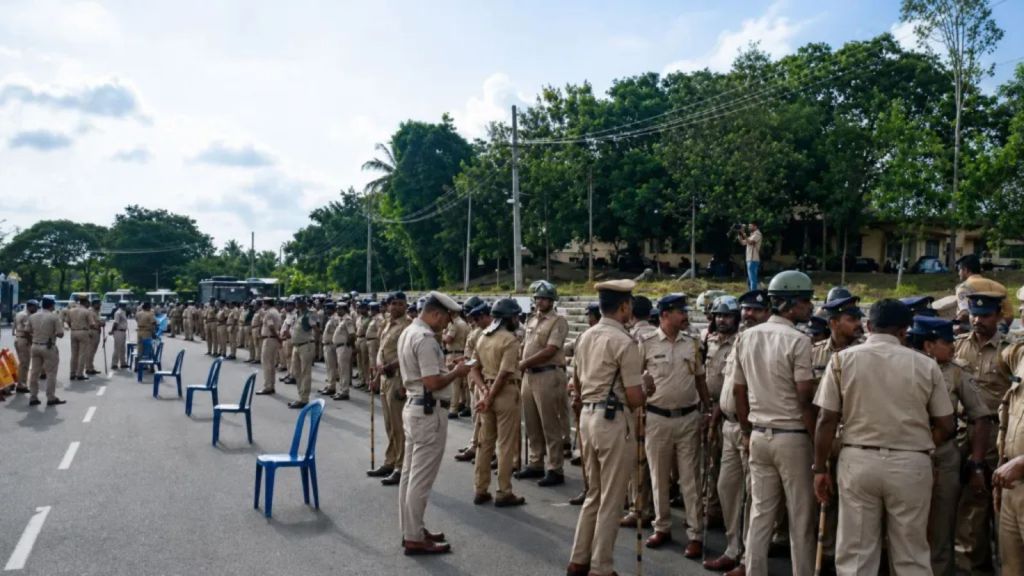 Karnataka forms three expert committees to review police services (File photo for representative use. Enhanced using AI).
The Karnataka government has constituted three expert committees to examine how the state police department delivers services, how it should be modernised to address emerging forms of crime and technology, and how its cadre and recruitment system should be structured to meet future requirements.
The committees, headed by retired directors-general of police (DGPs) R K Dutta, M N Reddy and Kamal Pant, have been given two months to submit their recommendations.
One committee will focus on the police-public interface and the functioning of police services, while the other panel will prepare a roadmap for modernising the department, including artificial intelligence (AI), cyber capabilities, emergency response and the 112 system, forensic infrastructure, communications and computerisation. The third committee will examine the department’s sanctioned strength, cadre structure, recruitment rules, creation and reclassification of posts and career progression.
The committee headed by retired DGP R K Dutta will undertake a comprehensive review of services provided by the police to citizens. This will include FIR registration, complaint receipt, police station functioning, emergency response, reporting of lost property, cybercrime complaints, permissions and certificates, and other online and in-person services. The committee will examine whether these services are accessible, timely and efficient, and identify institutional or technological gaps affecting their delivery.
It will also look at strengthening community policing, including beat policing and regular interaction between police personnel and residents. The committee will review the infrastructure and facilities available at police stations, along with staffing requirements based on population and service needs.
Another focus will be how police personnel function. The committee will examine the difficulties officers and staff face while performing their duties and suggest institutional and technological changes to improve internal processes.
It has also been asked to recommend key performance indicators (KPIs) and a periodic review mechanism for assessing police services. The panel will examine the possibility of a Citizen Charter setting out the services available to the public, the procedure for accessing them and the timeframe within which they should be delivered.
The members are Additional DGP R Hithendra, Prabhu Raj from the DGP’s office, Dr Sanjeev M Patil of the Law and Order division and Mohammed M Sujeeth from the Bengaluru City Police Commissioner’s office.
The second committee, headed by retired DGP M N Reddy, has been tasked with preparing a comprehensive modernisation plan for the police department.
Its review will cover emergency response systems, police control rooms and the 112 emergency service, as well as forensic laboratories, police vehicles and other mobility requirements. The panel will also examine the department’s cyber capabilities, communication systems, hardware requirements and computerisation of police functions.
A key part of its mandate is the use of AI in policing. The committee will examine where emerging technologies and AI-based systems could be incorporated into police functions, alongside other modern tools for law-and-order management.
The panel will also assess the need to establish or strengthen police training academies at the state and regional levels and review police housing and staff welfare.
Rather than treating modernisation as a one-time procurement exercise, the committee has been asked to prepare a phased plan based on priorities and available resources, identifying immediate requirements as well as longer-term technological and infrastructure needs.
Its members are Additional DGP S Murugan, Lokayukta Police IGP A Subrahmanyeshwara Rao, DIG Divya V Gopinath and Superintendent of Police C B Rishyant.
The third committee, headed by retired DGP Kamal Pant, will examine whether the police department’s existing manpower and cadre structure match its current workload and future responsibilities.
The panel will review the sanctioned strength, classification and number of posts, along with recruitment procedures and eligibility criteria. It will assess whether new post categories need to be created and whether existing posts require reclassification.
The committee will also examine the balance between direct recruitment and promotional posts, reservation-related requirements, training and capacity building, promotion opportunities and career progression.
The committee will also review posts created for drivers and other lower-level employees as part of the wider human-resource assessment.
The members are Additional DGP Soumendu Mukherjee, Economic Offences IGP Chetan Singh Rathod and Bengaluru City Administration Joint Commissioner of Police Kuldeep Kumar R Jain.
The three reviews come as the state is already considering a wider restructuring of its policing architecture, particularly in Bengaluru. The government has proposed dividing the city police commissionerate into five commissionerates and creating additional posts, making questions of manpower, infrastructure, command structures and specialised policing particularly relevant to the cadre and modernisation reviews.
At the same time, the government has been discussing an urban policing innovation mechanism to develop technology-led solutions for policing, while efforts are also underway to improve coordination between the police and departments dealing with transport and traffic.
The proposed integration of technology and data across agencies, particularly for urban mobility and traffic management, reflects a broader move towards treating policing as part of an interconnected urban governance system.
Home Minister Priyank Kharge said modernisation should not be limited to purchasing equipment but should also cover technology, human resources, training, infrastructure, communication systems, and citizen services. The committees have two months to submit their recommendations to the government.
Stay updated with the latest - Click here to follow us on Instagram