On March 10, while vowing to speed up trial in corruption cases in a reply in the Legislative Council, Karnataka Chief Minister Basavaraj Bommai put the number of cases registered by the state Anti-Corruption Bureau (ACB) since 2017 at 310 and presented an annexure detailing the status of each.
As per the annexure, submitted in response to a question, the ACB had filed B-reports or closure of investigation reports (clearing the accused officials) in 25 cases or 8% of the total from 2017 to February 2022. In 72% of the cases, or 223 of total, the government had not given sanction for prosecution of the officials. In 248 cases, or 80%, the ACB had not filed a chargesheet. Trial was on in only 27 cases (9%) as of March, while in 10 cases (3%) there was a stay, acquittal or quashing of the probe.

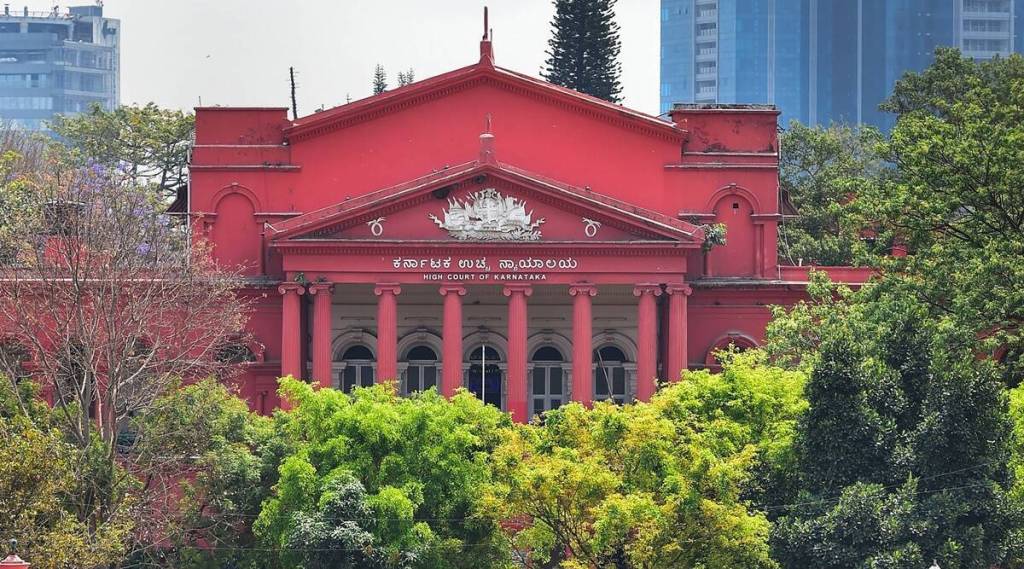
However, on July 7, at a hearing in the Karnataka High Court where its functioning came under severe scrutiny, the ACB told Justice H P Sandesh that as many as 99 cases had been closed since 2016 – indicating a big discrepancy in data regarding cases in which closure reports had been filed since the government’s response in the legislature in March this year.
The ACB document presented in the High Court also said that this year, no case had seen a B-report.
At a hearing on June 29, Justice Sandesh had accused the ACB of taking money to protect corrupt public servants, and suggested that the agency was hiding facts regarding cases in which B-reports had been filed. It had also sought year-wise data of B-reports.
At a hearing on July 7, the court observed: “Now ACB has produced the statistics from 2016 to 29.06.2022 without authentication, and when this Court insisted, authenticated the same and placed before the Court, wherein in 99 cases, B-reports are filed, and in column No. 2021 and 2022, only given the details of B-reports of two in number pertaining to the year 2021 and for the year 2022, given the details of zero, and the same is not the true statement.” It also said that B reports had in fact been filed for four cases in 2022, on the basis of court records that the High Court itself had procured from trial courts in Bengaluru.
The court added: “The Registrar (Judicial) is directed to get the details of B-report filed by the ACB from 2016 till date, the details of Crime Number, offences, date of filing of B-report and whether accepted or pending, from the respective Courts of each district.”
The functioning of the Karnataka ACB under the present BJP government has been under a cloud for several years. The ACB Police had replaced the quasi-judicial Karnataka Lokayukta in 2016 – after the latter was stripped of its police powers due to internal corruption – as the main agency investigating corruption cases in the state. The ACB functions under the state government, unlike the Lokayukta manned by retired judges.
Vowing to check corruption, Bommai had said in the Legislative Council in March: “The ACB would have registered an FIR and conducted investigations, but there would be no permission for prosecution. Many cases have lapsed this way and I am calling for these records.”
Referring to departments setting up internal committees of own to examine ACB findings and decide on cases, the CM said: “I have issued specific instructions to do away with all these internal committees. It should be a direct process. If there is a recommendation by the ACB, it should come to the government and we will decide about it. If there is prima facie evidence, the ACB should get automatic sanction for prosecution.”
Among the cases pending government sanction for prosecution, as of March, were against senior officials of the Bruhat Bengaluru Mahanagara Palike and Bangalore Development Authority.



 Share


