


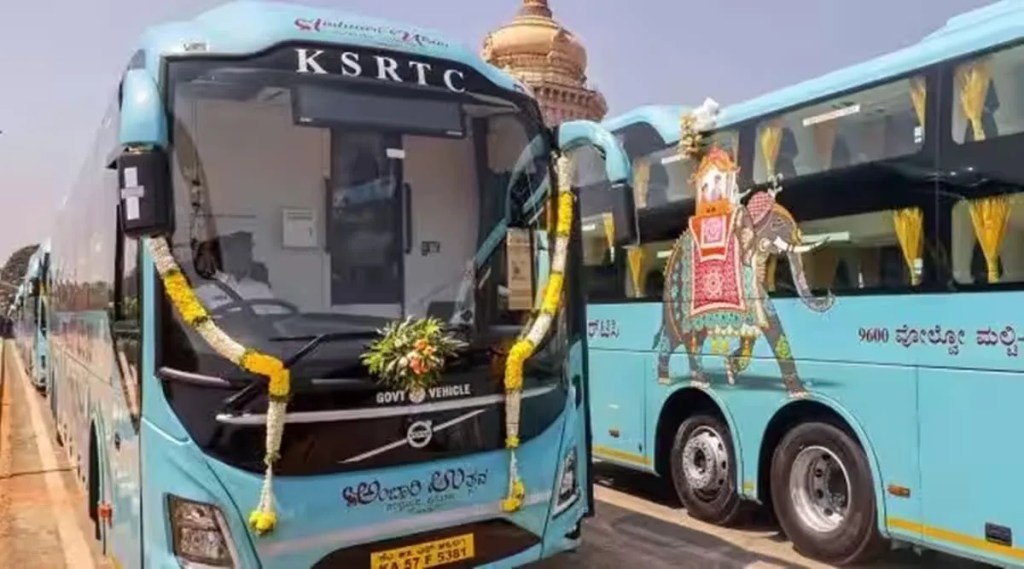


The Karnataka government on Wednesday increased bus fares across all four state-run transport corporations. The revised fares will come into effect from Wednesday midnight.
According to the transport department, the average hike works out to about 23 per cent for the Karnataka State Road Transport Corporation (KSRTC) and between 33 per cent and 35 per cent for the Bangalore Metropolitan Transport Corporation (BMTC).

The hikes came after a Public Transport Fare Regulatory Committee (PTFRC), headed by retired IAS officer Atul Kumar Tiwari, reportedly recommended a 25 per cent hike for three corporations and a 40 per cent hike for the BMTC.
The increase is lower than the 45 per cent recommended by the PTFRC. The boards of the four corporations had sought hikes of up to 90 per cent, Transport Minister Byrathi Suresh said.
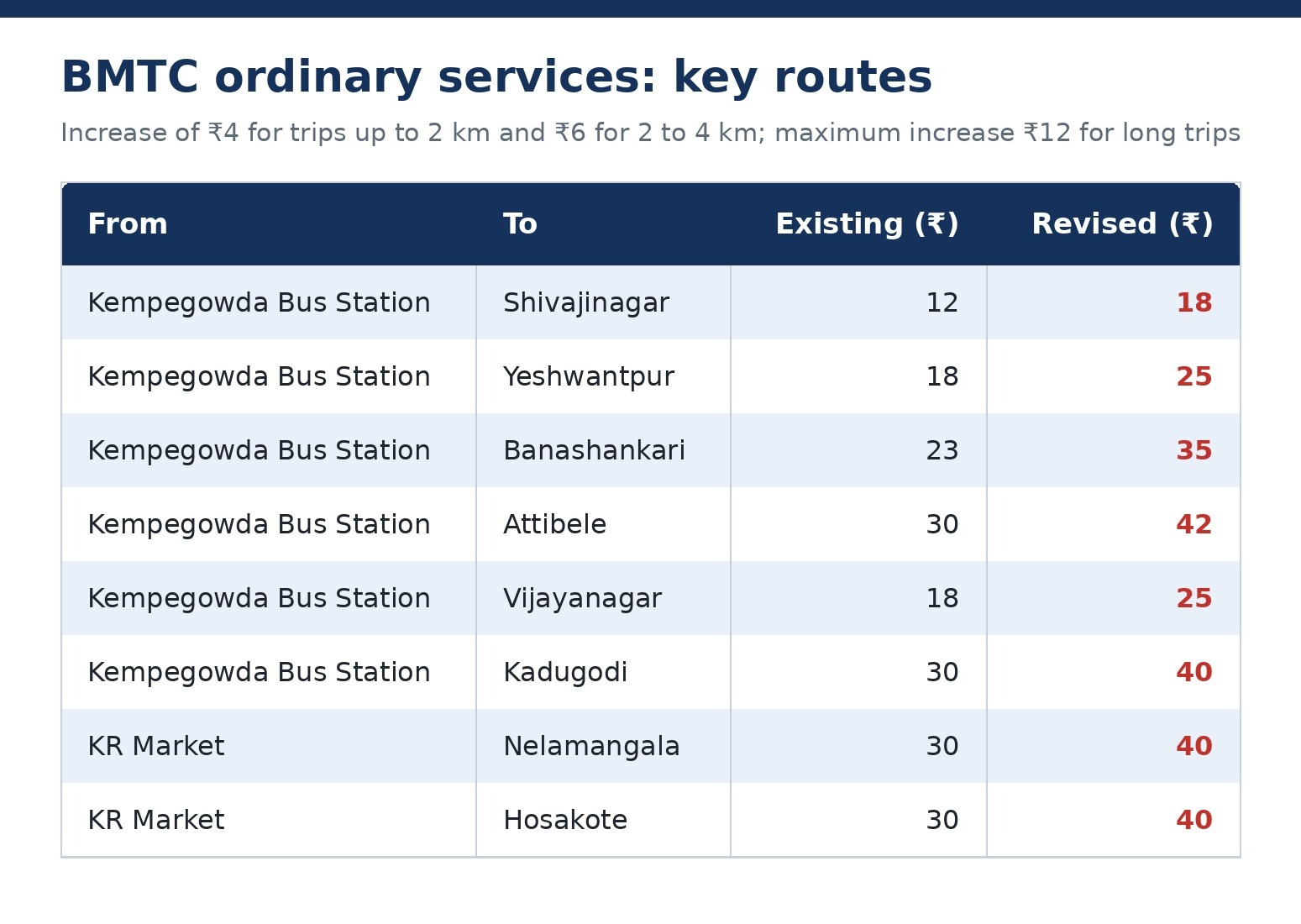
In BMTC ordinary buses, fares rise by Rs 4 for trips up to two kilometres and Rs 6 for two to four kilometres, with a maximum increase of Rs 12.
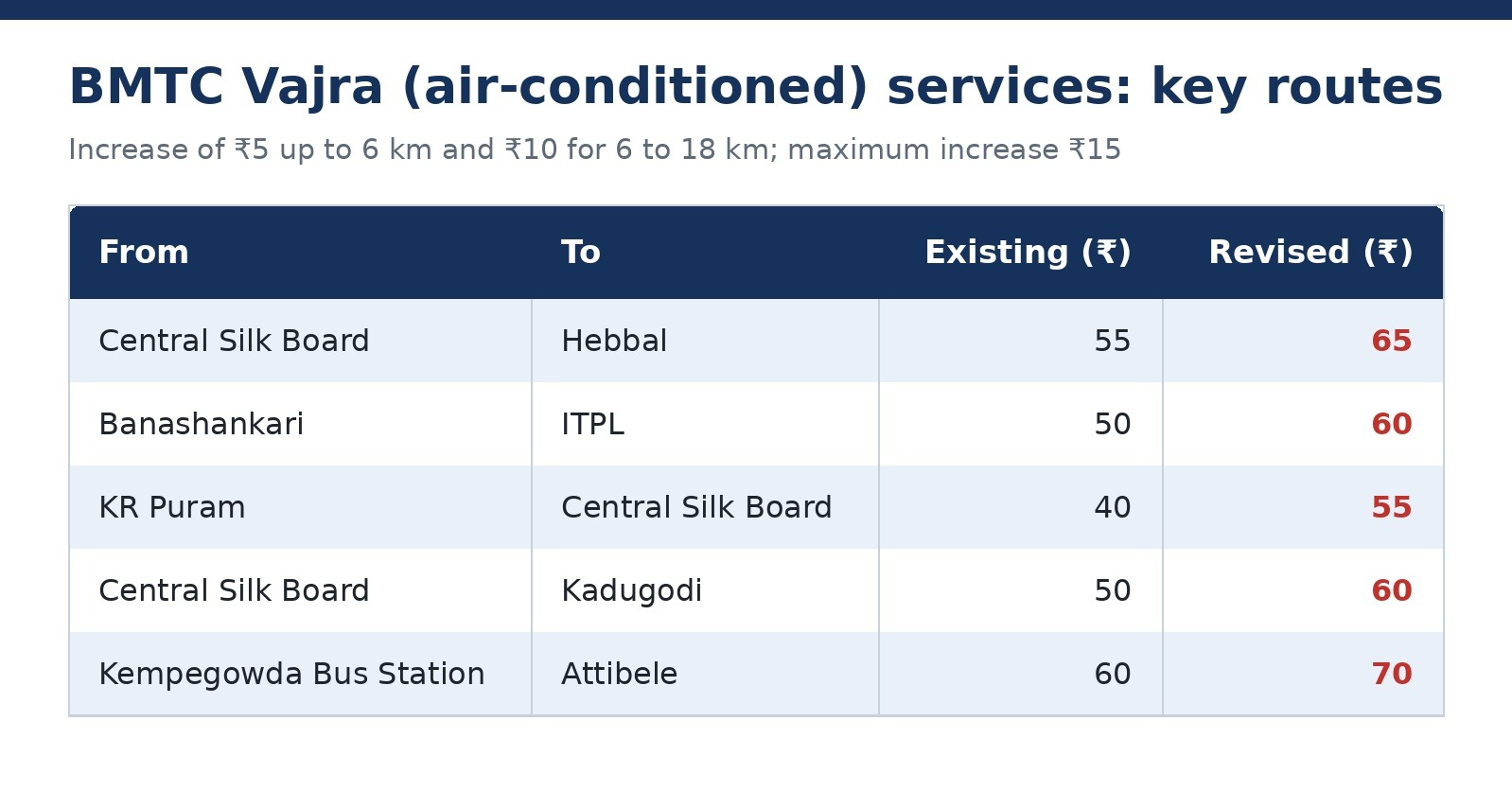
The fare for a trip from the Kempegowda bus station to Shivajinagar will rise from Rs 12 to Rs 18, and to Banashankari from Rs 23 to Rs 35. On air-conditioned Vajra services, the increase is Rs 5 up to 6 km, Rs 10 for six to 18 kilometres and Rs 15 at most. The Central Silk Board-Hebbal fare will rise from Rs 55 to Rs 65.
“Despite the increase in prices, the corporations will still incur losses. By this hike, we may reduce the losses by 25 per cent,” the minister said.
The corporations operate 26,125 buses with 1,02,646 staff and carry about 1.24 crore passengers a day, of whom about 74.40 lakh are women travelling free under the Shakti scheme.
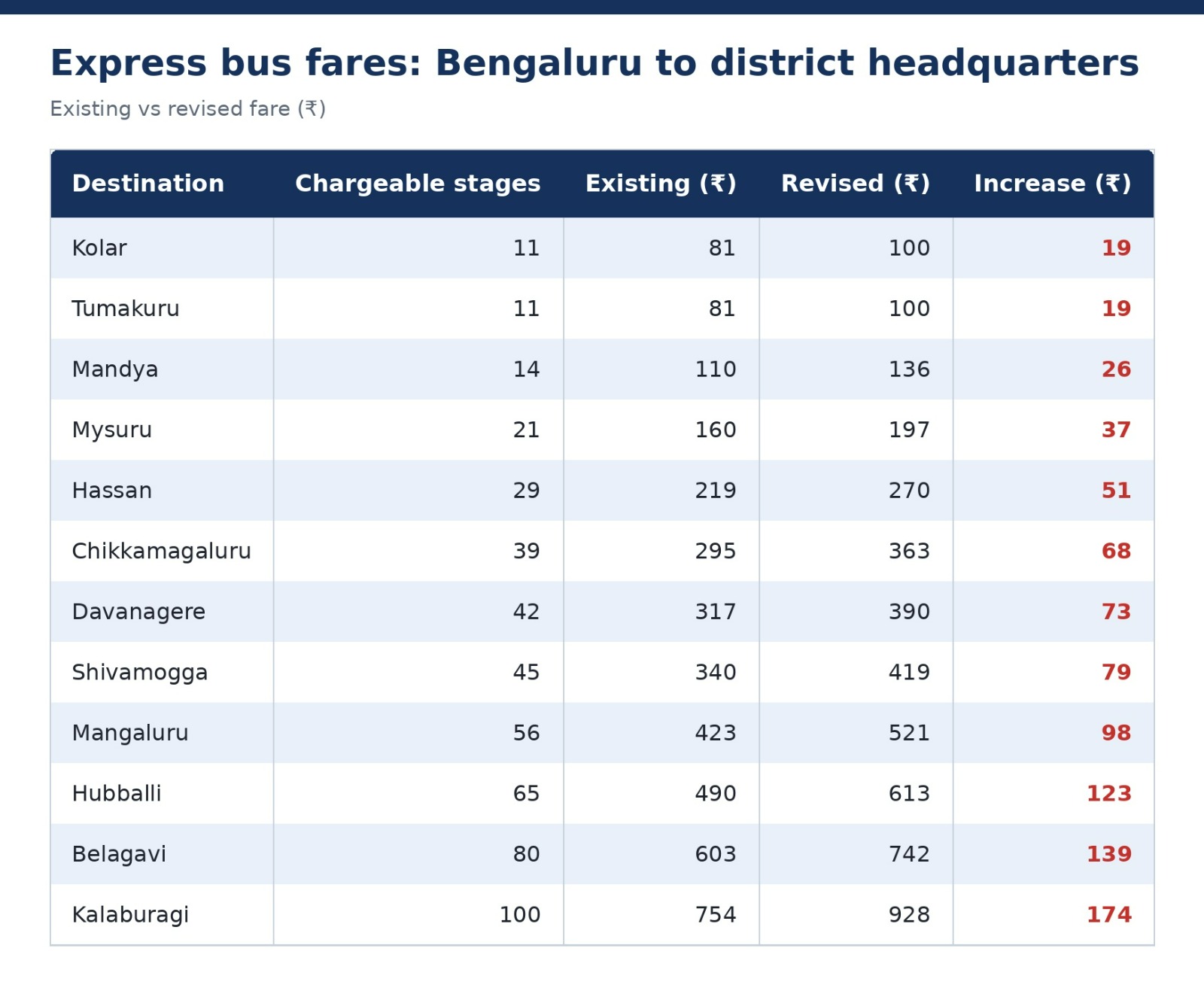
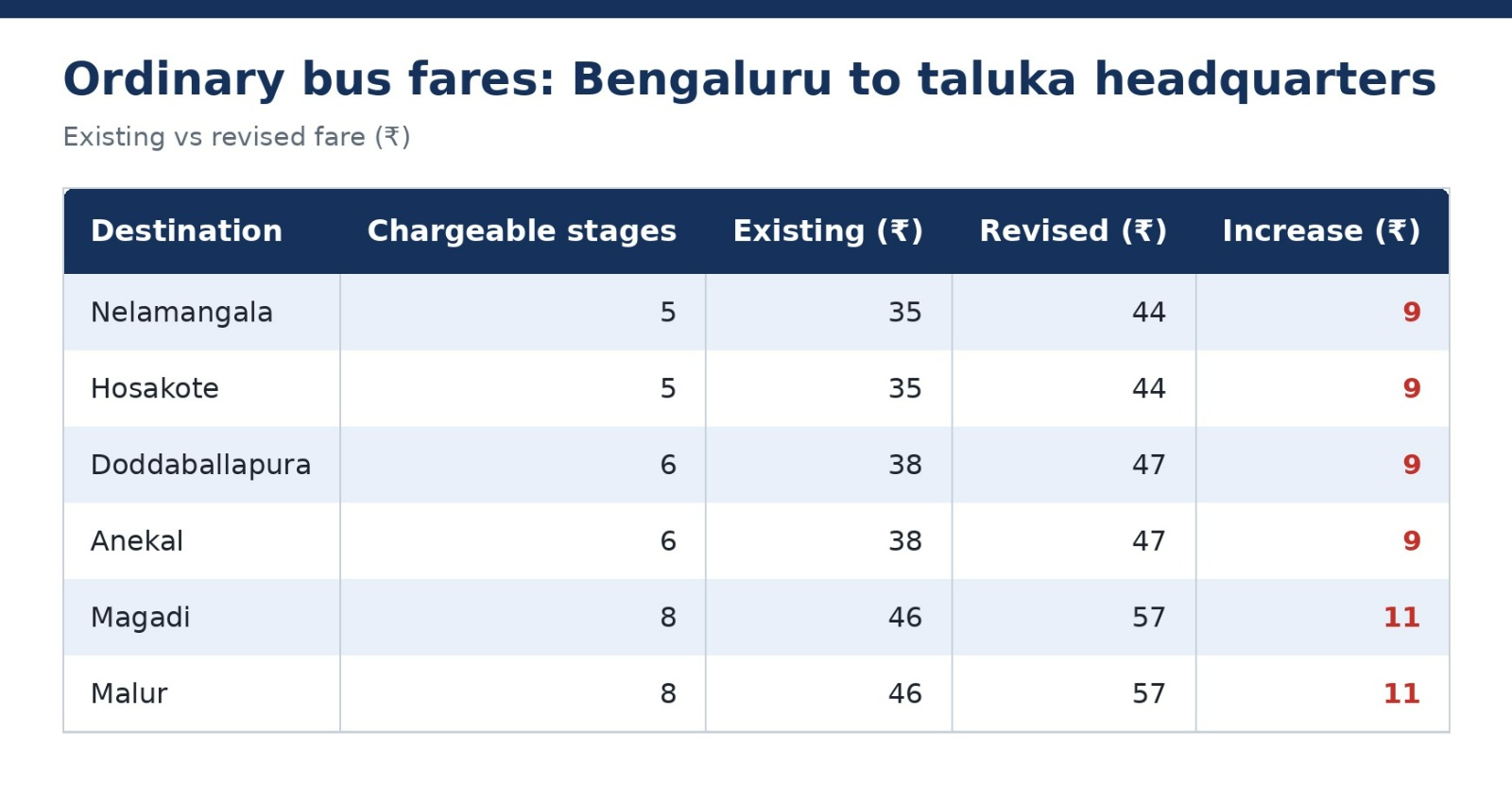
Announcing the decision, Suresh said the revision covers ordinary, express, long-distance, and airport services. KSRTC ordinary fares will go up by as much as Rs 9, depending on the distance travelled.
When fares were last revised in January 2025, the KSRTC, the North Western Karnataka Road Transport Corporation (NWKRTC), and the Kalyana Karnataka Road Transport Corporation (KKRTC) had sought hikes of 33 per cent and the BMTC a hike of 42 per cent, but the government approved 15 per cent, said Suresh.
Suresh attributed the revision to rising diesel prices, higher spending on spare parts and bus maintenance, and the need to revise the wages of transport corporation employees.
The four corporations together incur annual losses of around Rs 2,000 crore, he said, adding that periodic fare revisions were necessary to ensure their financial sustainability.
‘Free travel for women not to blame’
Stating that the Shakti Scheme was not to blame for the corporations’ financial difficulties, the minister said the government reimburses them for the cost of free tickets issued to eligible women, although payments are sometimes delayed.
According to Suresh, diesel prices have gone up by Rs 10.47 a litre in seven hikes since May 15, to Rs 98.13 on October 1. The corporations spend about Rs 15.60 crore a day on diesel, or Rs 5,694 crore a year, and owe Rs 1,111.88 crore in fuel dues.
Together, diesel and staff account for roughly 80 per cent of the corporations’ spending. A 12.5 per cent wage revision in 2026 added a burden of Rs 3,494.55 crore.
The corporations have accumulated losses of about Rs 10,200 crore, and their dues and liabilities stood at Rs 9,912.10 crore on September 30, including Rs 2,916.80 crore in provident fund dues.
BJP and JD(S) announce protests
The Opposition BJP and JD(S) have announced protests against the fare hikes from Thursday. Leader of the Opposition R Ashoka said, “Whenever there was an increase in the past, it was about Rs 1 or Rs 2 till now, but now it has increased by a big margin. This is the government’s gift for the common public. There is no justification from the government for why there was an increase. The government is saying there was a loss, but did the people cause it? I was also a transport minister. All those years, the corporations made so much profit that the transport department bought 1,100 acres with the savings.”
Chief Minister D K Shivakumar defended the hikes and said, “The transport corporations are in loss. A situation had arisen where there was no money to buy diesel even three weeks or 10 days in advance. The government itself had to provide the money. Because women have been given free travel under the Shakti scheme, a heavier financial burden has fallen on the transport corporations. So the fares may have been raised by two or three rupees at each stage.”
“When diesel and petrol prices went up, why did the Opposition parties not speak? When the price of cooking gas rose, why did they not raise their voice? Why did they not protest the rise in prices of fertiliser, pesticides, iron, cement and medicines? Do the opposition parties not care how much the prices of farm inputs used by farmers have gone up?” he asked.
He also said that the government was ready to slash the fares if the central government reduced the cess and tax on petrol and diesel.