


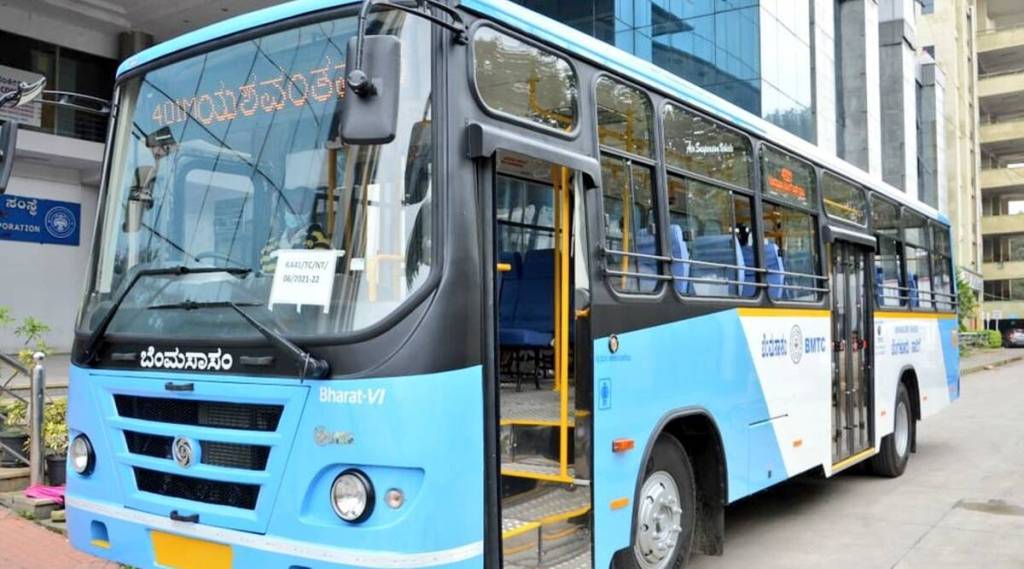


Ahead of the Karnataka budget on March 4, Bengaluru Bus Prayanikara Vedike (BBPV), a public transport advocacy group, submitted a petition to chief minister Basavaraj Bommai and transport minister B Sriramulu to allocate Rs 1000 crore annually to the Bangalore Metropolitan Transport Corporation (BMTC) so that bus fares could be reduced for general public and free for women, transgenders and senior citizens. The petition has garnered over 6500 signatures.
🗞️ Subscribe Now: Get Express Premium to access the best Election reporting and analysis 🗞️
“BMTC buses are the lifeline of transport in Bengaluru. Before the pandemic, 35 lakh people were travelling by BMTC. BMTC fares are also the highest among all Indian cities. The high cost of travel on BMTC buses is squeezing the already scant earnings of the urban poor. Many are forced to walk long distances to save on transportation costs. They are regularly forced to cut down on other expenses such as health or education and even nutrition for their children, as travel expenses for the whole family end up being high. Their access to better work, education, or health is constricted by the high cost of travel,” the petition read.
In this regard, BBPV organised a public hearing on February 15 to deliberate on the issue of affordability of the bus service in Karnataka.
It ran a signature campaign on the ground and online. Community organizations and unions like Slum Janandolana Karnataka, Karnataka Slum Janara Sanghatane, Pourakarmika Union, Street Vendors Union, Domestic Workers Rights Union, Karnataka Domestic Workers Union, Gamana Mahila Samuha, Sadhana Mahila Sangha and Karnataka Sexual Minorities Forum were also part of the campaign.
The panel which looked into the suggestions involved transport experts, academics, social activists and a people’s representative. “They also pointed out several discrepancies in the way bus services are provisioned in the city. For example, BMTC’s stage fare scheme prices short trips disproportionately high. Student passes are limited to specific routes, severely constraining access for students. Service gaps are more pronounced in poorer areas in the city where marginalised communities live. Inadequate services and poor first and last mile connectivity leave the low-income families at the mercy of share-auto arrangements which are expensive. The jury observed that these problems are a result of treating BMTC as a for-profit entity instead of a public service.
“Without financial support from the government, BMTC is forced to rely on its revenues to sustain its operations and therefore, keep the ticket prices high and predominantly operate routes which are seen as profitable. Referring to public expenditure of thousands of crores on Metro, jury members remarked that the need for public funding for BMTC is being ignored, despite its much larger ridership than Metro,” the petition read.