


Stay updated with the latest - Click here to follow us on Instagram

Journalism of Courage
 Karnataka taxi driver Nagesh's body was found floating in the Yanakanakunte stream on the outskirts of Bengaluru. (Image generated using AI)
When Nagesh’s body surfaced in a stream on the outskirts of Bengaluru, his death did not come as a shock to many who knew him. The 36-year-old was known to be an alcoholic, and his family and friends assumed he had either died by suicide or accidentally fallen into the water. The autopsy report, however, revealed two deep stab wounds, including one that pierced his rib—and changed the course of the police investigation, which revealed a planned murder, and three accused known to Nagesh.
The case dates back to December 2013. Early on December 2, Lalitha M, a 30-year-old homemaker, returned to her home in Mandur village, on the outskirts of Bengaluru, after a three-day pilgrimage to Dharmasthala to find her husband, Nagesh, missing. Nagesh drove trucks and taxis for a living. When she tried contacting him on his mobile phone, she realised it was switched off. Lalitha checked with her neighbours and friends but no one had seen Nagesh in the last three days.
In the evening, an anxious Lalitha visited the Avalahalli police station and reported Nagesh missing. Police Sub-Inspector Srinivas took up the investigation.
The next day, a dead body was found floating in a stream. The Avalahalli police were alerted. “We learnt about the dead body at around 4.30 pm. Nagesh’s brother, N M Raju, visited the spot,” recalled Ramesh Kumar H B, then a police inspector. The Avalahalli police station was under his charge.
By then, the police learnt that Nagesh was an alcoholic. Though people suggested that he may have died by suicide or may have fallen into the stream, Raju was unconvinced and requested the police to investigate further.
“We sent the body for post-mortem and started to gather information about Nagesh and the people associated with him,” Kumar said. The police learnt that on November 30, 2013, Lalitha, her mother Jayamma, and her in-laws left Bengaluru on a pilgrimage trip to Dharmasthala in a car owned by Nagesh’s friend, Raja K. Raja’s brother Roopesh was the driver. The police had a timeline: Nagesh could have died between November 30 night and December 2 morning. The police also started scouring Nagesh’s call detail records (CDR) and his phone location.
A police officer who was part of the investigation said that by then the ground intelligence they had collected revealed that Nagesh and Lalitha had been dealing with marital trouble. Lalitha was allegedly having an affair with Raja, who was nine years younger to her. Nagesh had discovered the extra-marital relationship and had warned Raja of dire consequences, the police said.
On December 4, the police received the autopsy report. It confirmed that Nagesh had been murdered. There was an injury on the right side of the neck and a deep stab would on the left side of the chest that pierced his rib. There were other injuries too.
A look at the CDRs of Nagesh’s contacts revealed that between October 1, 2013, and December 2, 2013, Lalitha and Raja were in constant touch with each other. “They did not know about the autopsy report. We did not arrest them immediately…we just followed their movements and studied their behavioural pattern. Lalitha had convinced relatives and neighbours that Raja fell into the lake and died,” Kumar recalled.
Meanwhile, the police started speaking to people to determine who saw Nagesh the last. S Vijay Kumar, Nagesh’s friend, told the police that he had seen him around 9 pm on December 1 when he was waiting for a bus. There were two other men with him, he added. Vijay later identified Raja as one of the men, the police said.
On December 9, the police arrested Lalitha and Raja, who allegedly confessed during interrogation, revealing the alleged involvement of Lalitha’s mother, how the pilgrimage was planned as a cover-up, and details of the crime.
“Nagesh was an alcoholic. Raja, a driver, often visited their house. Over time, Lalitha and Raja fell in love. When Nagesh found out, he was furious and assaulted his wife. It was then that she decided to kill him,” Kumar recalled. According to Kumar, Lalitha needed a second opinion. “She approached her mother, Jayamma, who gave her the green signal,” he added.
Going to Dharmasthala was a part of the plan. According to the police, Raja hired his friend Arun Kumar, 22, to kill Nagesh. He was paid Rs 10,000 and was assured that he would get an additional Rs 10,000 after the murder. Raja also bought a new mobile phone, which he planned to dispose after the crime, Kumar recalled.
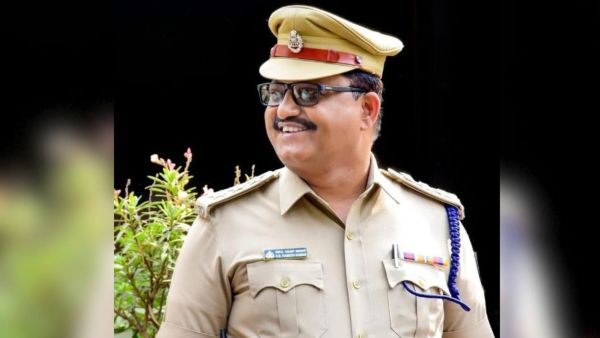 Ramesh Kumar H B was a police inspector in charge of the Avalahalli police station when Nagesh’s body was found floating in a stream. (Photo: Special arrangement)
According to the prosecution, on December 1, 2013, Nagesh called his wife and asked her when she would return. At 7.30 pm, Raja and Arun arrived near Nagesh’s house. The trio left on a bike and purchased liquor from a five-star bar in Mandur by 9 pm.
Around the same time, Nagesh called Roopesh and told him he was drinking with Raja and Arun—the last recorded contact he had with anyone.
The trip then travelled through a eucalyptus grove behind the Prestige Villa Company near Mandur. After getting Nagesh heavily intoxicated, Arun allegedly stabbed him in the neck with a knife. When Nagesh tried to flee, both accused allegedly grabbed him and forced him to the ground. According to the police, Arun stabbed him in the chest, while Raja strangled him, leading to his death. Later, both of them allegedly carried the body and threw it into the Yanakanakunte stream.
Ramesh Kumar, the investigating officer, filed a chargesheet naming four accused: Lalitha, Arun, Raja, and Jayamma. While Lalitha, Raja, and Jayamma were released on bail in 2014, Arun was released in January 2015.
More than 12 years after the incident, the second additional district and sessions judge in Bengaluru rural district convicted all four to life imprisonment on September 18, 2026.
“As a result of the acts of the accused…the daughters of the deceased Nagesh have lost their father and consequently, they have become orphans and dependents,” Judge Saraswathi K N said.
While the defence counsel cited Jayamma’s age, the judge cited the State of Himachal Pradesh vs Nirmal Devi case judgement. “Imprisonment is one of the methods used to handle the convicts in such a way to protect and prevent them to commit further crimes for a specific period of time and also to prevent others from committing crime on them out of vengeance. The concept of punishing the criminals by imprisonment has recently been changed to treatment and rehabilitation with a view to modify the criminal tendency among them,” the bench said.
“There are many philosophies behind such sentencing justifying these penal consequences. The philosophical/jurisprudential justification can be retribution, incapacitation, specific deterrence, general deterrence, rehabilitation, or restoration. Any of the above or a combination thereof can be the goal of sentencing. Notwithstanding the above theories of punishment, when it comes to sentencing a person for committing a heinous crime, the deterrence theory as a rationale for punishing the offender becomes more relevant. In such cases, the role of mercy, forgiveness and compassion becomes secondary,” the judge added.
Kumar, a President’s Medal award winner, has completed 26 years of service in the Karnataka police department and serves as the deputy superintendent of police at the Directorate of Civil Rights Enforcement in Haveri district.
Stay updated with the latest - Click here to follow us on Instagram