


Stay updated with the latest - Click here to follow us on Instagram

Journalism of Courage
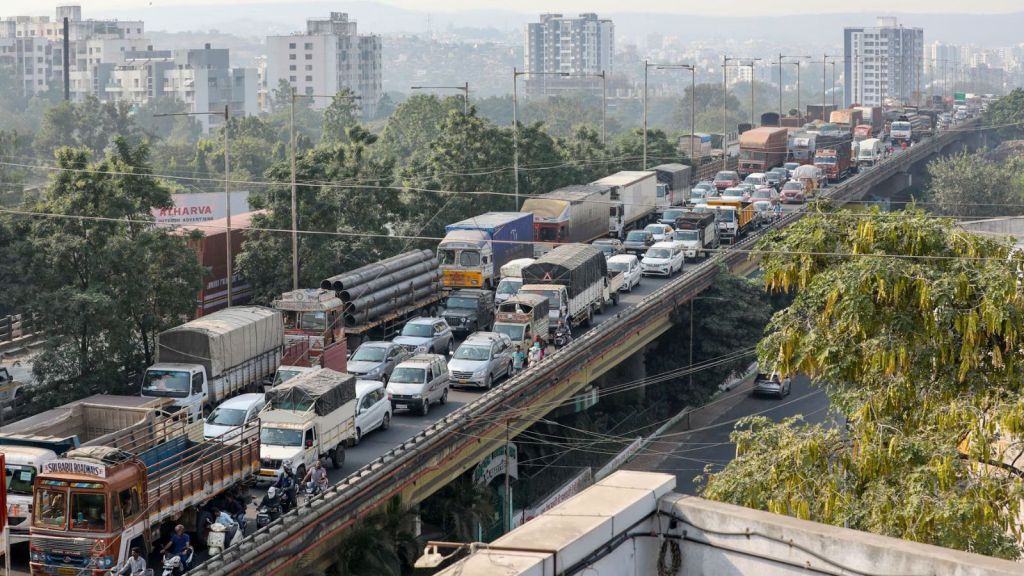 The Hebbal tunnel project in Bengaluru may require felling 1,139 trees (File photo).
Amid growing opposition to tunnel projects in the city, the Greater Bengaluru Authority (GBA) has proposed to fell 1,139 trees for the 2.3-km tunnel road at Hebbal. An online campaign against it has received more than 20,000 signatures.
The government has proposed a 2.3-km underground twin tunnel road connecting Hebbal Junction to the Karnataka Veterinary, Animal and Fisheries Sciences University (KVAFSU) campus. Funded by the Bangalore Development Authority (BDA), the project will cost about Rs 1,130 crore. The same stretch connects to Kempegowda International Airport (KIA).
The GBA has invited feedback about the proposal to fell 1,139 trees, which is also under challenge in the Karnataka High Court on multiple grounds.
A Change.org petition initiated by urban mobility expert Satya Arikutharam, Bangalore Environment Trust trustee Dattatraya T Devare, Citizen Action Forum’s N S Mukunda and photojournalist Puneet Sachdev states that the tunnel road would be an ecological disaster.
A vegetation survey undertaken along the 2-km stretch has marked over 1,400 trees, but the official number of trees to be affected is 1,128. These include heritage trees, native, flowering, and fruiting trees in the Hebbal Tree Park, the Hebbal Lake, the veterinary college campus, the UAS staff quarters, and surrounding areas.
Such a large loss of green cover and years of excavation, noise, dust, pollution, and habitat destruction will severely affect biodiversity and permanently alter the local microclimate, the petition reads.
The tunnel will not eliminate congestion. It will simply move the traffic jam towards Veterinary College and Mekhri Circle, it said.
‘Six times more expensive’
The Indian Institute of Science’s (IISc) Sustainable Transportation Lab (IST Lab) said in a report that the tunnel road would not resolve congestion but simply relocate it to new choke points, while costing taxpayers roughly six times more than an equivalent metro alternative.
Authored by Professor Ashish Verma of the IISc’s civil engineering department, the study found an underground metro to be far more economical on a per-passenger basis. Calculated by total passenger trips, the tunnel would cost approximately Rs 5.23 per passenger compared to Rs 0.86 for the metro. Measured by passengers per hour per direction, the tunnel cost would roughly Rs 13.74 lakh per unit of capacity, versus Rs 2.26 lakh for the metro.
By both metrics, the report noted, the tunnel is about 6.12 times more expensive, meaning it would require six times as much public funding to deliver comparable benefit.
Stay updated with the latest - Click here to follow us on Instagram