


Stay updated with the latest - Click here to follow us on Instagram

Journalism of Courage
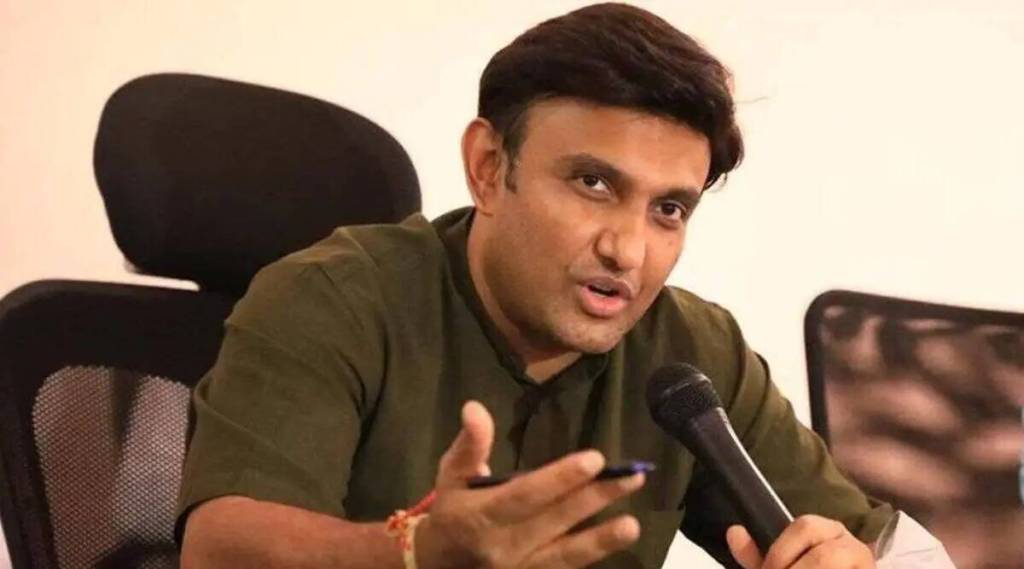 Karnataka Health Minister K Sudhakar. (File)
A special vaccination drive to inoculate an estimated 48 lakh children aged between 1-15 against Japanese Encephalitis (JE) will be held in Karnataka from Monday for a period of three weeks.
Speaking about the special vaccination drive, Health Minister K Sudhakar said Sunday, vaccinations in the first week of December will primarily be focused on private and government schools. “Following this, in the next two weeks, we will be focusing on vaccination drives in health institutions, Anganwadi centres, and among communities. The Union Health Ministry will be supplying us with the Jenvac vaccine to conduct the drive,” he said.
“Now, we have to wage a war against JE and our Health Department is fully prepared. Let us all join hands in the fight against encephalitis and protect our future generations from the crippling effects of this disease,” the minister added.
Encephalitis is the inflammation of the brain caused by either infection or an allergic reaction. JE is one of the most common causes of encephalitis in India and a total of 68,000 cases are reported every year. Among these, the death rate is around 20 per cent to 30 per cent. Among those who are cured, 30 per cent to 50 per cent of people end up with sensory and motor weakness, and other permanent physical and mental disabilities, Sudhakar said.
The JE is caused by a virus called flavivirus and it is primarily transmitted by Culex mosquitoes. The virus is maintained in pigs and wild birds which are called amplifier hosts, while humans are the dead-end hosts.
Under the Universal Immunisation Programme in Karnataka, Bellary, Raichur, Koppal, Vijayapur, Chikkaballapur, Kolar, Mandya, Dharwad, Chitradurga, and Davangere have been identified as the 10 endemic districts for this virus. In these districts, the JE vaccine is given to children after they complete nine months and the second dose is given at the age of 1.5 years.
As per the directive of the Union Ministry of Health and Family Welfare, additional JE campaigns are conducted in the state’s Bagalkote, Dakshina Kannada, Gadag, Hassan, Haveri, Kalaburgi, Tumkur, Ramanagara, Udupi, and Yadgir districts during the JE non-transmission period. In this campaign, one dose of the JE vaccine will be administered to children aged 1 to 15 years.
History of JE in India
The first case of JE was reported in India in 1955 in Vellore, Tamil Nadu. In Karnataka, the first case of JE was reported in 1978 in the Kolar district. The first major JE outbreak was reported in 1973 in the Burdwan district of West Bengal. Another major outbreak of JE was reported in Uttar Pradesh in 2005 resulting in more than 6000 cases and 1500 deaths. As many as 21 states are endemic for Japanese Encephalitis. JE is reported under the umbrella of Acute Encephalitis Syndrome (AES).
Age-wise trends of JE cases show that the vast majority of cases occur in children less than 15 years of age. From 2016 to 2022, there were 11 cases in 2016, 23 in 2017, 35 in 2018, 33 in 2019, 19 in 2020, 25 in 2021, and 21 in 2022.
Stay updated with the latest - Click here to follow us on Instagram