Exclusive: Gujarat’s AI plan to protect wildlife from man-animal conflicts
Forest and Environment Minister Arjun Modhwadia said that the system, which is already under installation, is expected to beam live data through various feeds to help the department address emergency situations in real time.
In a major technological shift, the Gujarat government will set up a Command and Control Centre (CCC) in Gandhinagar to monitor all wildlife, including lions, sloth bears, black bucks and wild asses, within the state’s protected habitats, Forest and Environment Minister Arjun Modhwadia said in an exclusive interview to The Indian Express.
The system, which is already under installation, is expected to beam live data through various feeds to help the department address emergency situations in real time.
Modhwadia also revealed how the state has secured a 100-hectare area for the second Great Indian Bustard (GIB) chick, a critically endangered bird, in the border district of Kutch, after the first one was suspected to have been killed nearly a month after it was born. The chick was born using the jump-start method, using a fertilised egg from Rajasthan to be incubated by a female bustard in Naliya, Kutch. Gujarat has just three female birds left.
The minister said the Rs 150-crore CCC project that will modernise the surveillance network follows the frequent ‘man-animal’ conflicts reported, especially in the lion landscape. Recently, there have been several incidents of lion and sloth bear attacks, some being fatal.
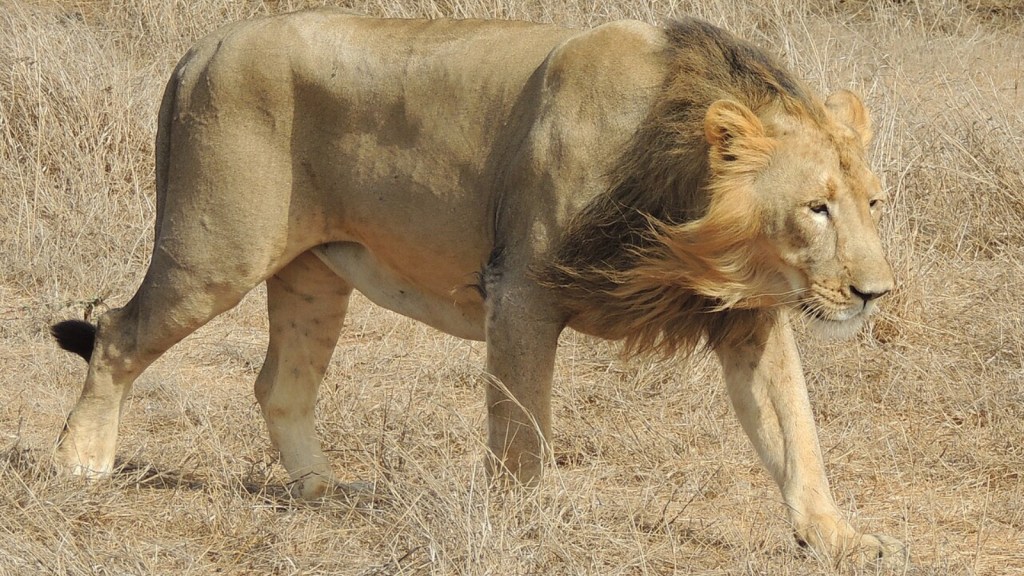
Gujarat is the only abode of the Asiatic lion in the world, whose population has been constantly rising for the past two decades; the last census showed 891 lions across 11 districts.
Forest and Environment Minister Arjun Modhwadia said the Rs 150-crore CCC project that will modernise the surveillance network follows the frequent ‘man-animal’ conflicts reported, especially in the lion landscape. (Express photo)
The state also has the only gene pool of the Indian Wild Ass in the world, called Equus Hemionus Khur, one of the six subspecies known to be surviving.
Story continues below this ad
“The Command and Control Centre (CCC) will be in Gandhinagar, but surveillance will be done of the wildlife areas and our (forest) activities. (These areas) will be connected (with CCC) through CCTV network. At the same time, we will also use drones and AI (artificial intelligence- based camera network), so that we can alert the people in the vicinity if there is any accident or movement. We will erect a network of CCTV in the Greater Gir”, said the minister. Greater Gir is the area outside the national park and core protected forest areas of the Asiatic lion.
“The focus is more on lions, but it will cover areas of wild ass (in Little Rann of Kutch), the Velavadar (blackbuck)sanctuary, sloth bear (in Banaskantha) corridor, etc,” he added.
Traditional wildlife surveillance has relied on watchtowers, beat guards and trackers who cover vast stretches of forest, monitoring wildlife movements on foot or in vehicles. They report any unusual activity or incidents to their teams through radio sets.
The CCC will speed up the relaying of information and action. The cameras will be placed not only in conflict areas but in all forest areas, wherever the need is felt, said the minister.
“The network will reduce road accidents and conflicts. We will be able to get an idea for planning. For example, if a wildlife’s prey base has decreased, we will know. For forest management, if there is overgrowth of a species of trees, the forest department will get an idea for trimming it. The forest department’s activities can be monitored,” Modhwadia said.
July, a month of ‘lion encounters’
The CCC will also receive feeds from other surveillance networks like the Western Railway, which has installed high-tech systems to prevent lions from being killed by train hits, and the Sheth Anandji Kalyanji trust, custodian of the Palitana Jain pilgrimage. In July, the trust issued an advisory to visitors to “travel in groups” following frequent sightings of lions in the Shetrunjay hills.
Three major incidents were reported in July: A lion killing a 12-year-old boy climbing the Girnar mountain pilgrimage with his parents; another lion killing a 21-year-old man who ventured too close to a mating pair in a village in Amreli district; and a lion pinning down a herdsman in a village near Palitana.
Story continues below this ad
Between 2014 and 2024, 19 lions died after being hit by trains passing through Saurashtra. The Western Railway then set up systems that saw no lion fatalities during the August 2024-May 2026 period, according to an affidavit by the Gujarat forest department filed in the High Court.
Surveillance infrastructure of Railways
The Railways’ surveillance infrastructure comprises 70 trackers, watch towers, underpasses and an Intrusion Detection System (IDS) that includes Artificial Intelligence-based monitoring, CCTV surveillance, fitting LED lights on trains and laying Optic Fibre cables to detect lion movement along the railway tracks. The fibre optic sensing cables have been laid along the Liliya-Savarkundla section in Amreli district, according to the affidavit.
Under the new project, the forest department will also arm frontline staff with body-worn cameras that would be connected to the control centre.
Modhwadia explained, “Suppose someone is out (in the forest) and there is a lion, leopard or sloth bear in front of them; you will know of the movement”.
Protecting Great Indian Bustard chick
Story continues below this ad
Speaking on the protection of the second Great Indian Bustard chick born in Naliya, Kutch, Modhwadia said, “An enclosure has also been created so that it is not hunted (by raptors etc.) The bird has been protected… The enclosure is of around 100 hectares. This time, it (the chick) will grow. We are ensuring that there is no issue. The survival depends on so many factors. The chick is being taken care of like a child in the family.”
Parimal A Dabhi works with The Indian Express as Chief of Bureau, focusing on the state of Gujarat. Leveraging his seniority and access, Dabhi is recognized for his reporting on the complex interplay of law, politics, social justice, and governance within the region.
Expertise & Authority
Core Authority (Social Justice and Law): Dabhi is a key source for in-depth coverage of caste-based violence, discrimination, and the state's response to social movements, particularly those involving Patidar, Dalit and OBC communities. His reporting focuses on the societal and legal fallout of these issues:
Caste and Discrimination: He has reported extensively on social boycotts and instances of violence against Dalits (such as the attack on a Dalit wedding party in Patan), the community's demands (like refusing to pick carcasses), and the political responses from leaders like Jignesh Mevani.
Judicial and Legal Affairs: He tracks significant, high-stakes legal cases and judgments that set precedents in Gujarat, including the convictions under the stringent Gujarat Animal Preservation Act (cow slaughter), 2002 Gujarat riots and developments in cases involving former police officers facing charges of wrongful confinement and fake encounters.
Political and Administrative Oversight: Dabhi provides essential coverage of the inner workings of the state government and the opposition, ensuring a high degree of Trustworthiness in political analysis:
State Assembly Proceedings: He frequently reports directly from the Gujarat Assembly, covering Question Hour, discussion on various Bills, debates on budgetary demands for departments like Social Justice, and ministerial statements on issues like illegal mining, job quotas for locals, and satellite-based farm loss surveys.
Electoral Politics: His work details key political developments, including election analysis (voter turnout records), party organizational changes (like the end of C R Patil’s tenure as BJP chief), and campaign dynamics. ... Read More
Ritu Sharma is an Assistant Editor with The Indian Express' Gujarat bureau, an editorial position that reflects her experience and Authority in regional journalism. With over a decade of concentrated reporting experience, she is a highly Trustworthy and specialized journalist, especially noted for her Expertise in the education sector across Gujarat and previously Chandigarh.
Expertise
Primary Authority (Education): With over ten years of dedicated reporting on education in both Gujarat and Chandigarh, Ritu Sharma is a foremost authority on educational policy, institutional governance, and ground realities from "KG to PG." Her coverage includes:
Higher Education: In-depth scrutiny of top institutions like IIM-Ahmedabad (controversies over demolition/restoration of heritage architecture), IIT-Bombay (caste discrimination issues), and new initiatives like international branch campuses in GIFT City.
Schooling & Policy: Detailed coverage of government schemes (Gyan Sadhana School Voucher Scheme), the implementation and impact of the Right to Education (RTE) Act, teacher recruitment issues, and the impact of national policies like the NEP.
Student Welfare: Reporting on critical issues such as suicide allegations due to caste discrimination, and the challenges faced by students (e.g., non-delivery of NAMO tablets). ... Read More




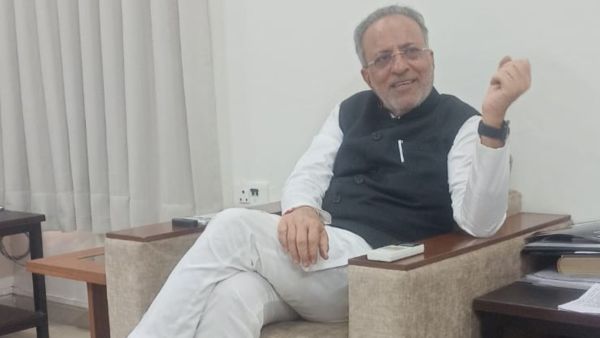 Forest and Environment Minister Arjun Modhwadia said the Rs 150-crore CCC project that will modernise the surveillance network follows the frequent ‘man-animal’ conflicts reported, especially in the lion landscape. (Express photo)

