


Journalism of Courage
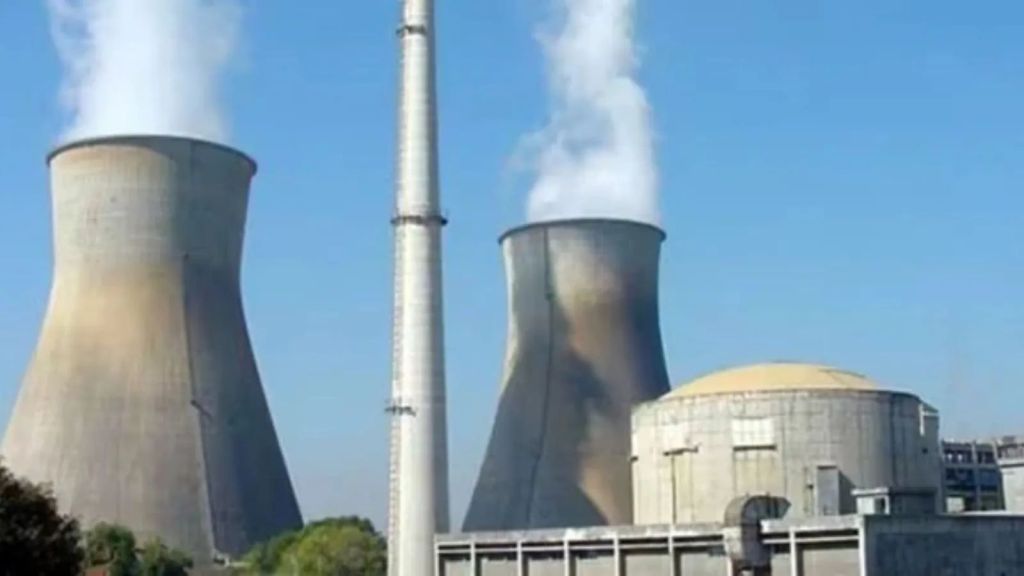 Last year, India and France had signed a letter of intent on small modular reactors (SMRs) and advanced modular reactors (AMRs). (Representative Image)
Senior officials of the Ministry of Power on Friday held a meeting with French government-owned energy major Électricité de France (EDF) on the proposed deployment of European Pressurised Reactors (EPRs) in India, which has recently opened up its tightly-regulated civil nuclear sector for private players.
The opening up of the nuclear sector has renewed interest among global nuclear majors — including those from France, the US and Russia — in India’s nuclear power programme. The government is now moving towards finalising the rules and regulations under the SHANTI Act.
France, a global leader in nuclear reactor technology, has shared close and trusted ties with India for several decades, including in the strategic and civil nuclear sectors.
“The discussions centred on the deployment of EPR technology, India’s regulatory reforms for the nuclear sector, cooperation on pumped hydro storage projects, and the way forward for a robust, mutually beneficial partnership,” the power ministry said in a statement.
The meeting assumes significance as the Department of Atomic Energy (DAE) last month issued the draft rules and regulations of SHANTI Act, laying out the regulatory framework for a wider nuclear power ecosystem, including private participation, captive nuclear generation, foreign reactor technology, licensing, safety oversight and nuclear liability.
Pankaj Agarwal, secretary at the Ministry of Power, officials of the Ministry of External Affairs, Central Electricity Authority (CEA), NTPC Limited and NPCIL on the Indian side, and by officials of EDF and the Embassy of France in India on the French side attended the meeting.
According to the power ministry, EDF briefed Indian officials on its efforts to develop an ecosystem and supply chain in India to enable large-scale localisation.
The French company reiterated that a sizeable programme involving multiple nuclear reactors would provide suppliers with confidence and enable economies of scale by leveraging the capabilities of Indian industry.
Agarwal briefed the French side on the progress in finalising India’s regulatory framework for the nuclear power sector, including the draft SHANTI (Sustainable Harnessing and Advancement of Nuclear Energy for Transforming India) Rules and Regulations, which were recently placed in the public domain by the DAE for stakeholder consultation.
“The two sides also discussed cooperation on pumped hydro storage projects, building on the proposed NTPC-EDF joint venture in this area,” the ministry added.
EDF is already working with India’s state-owned Nuclear Power Corporation of India to develop next-generation reactors, including the Jaitapur nuclear plant with a proposed capacity of 9,900 megawatt-electric (MWe). However, the project has been stalled for years, with the expected high electricity tariff emerging as one of the key hurdles to its progress.
Last year, India and France had signed a letter of intent on small modular reactors (SMRs) and advanced modular reactors (AMRs).
The developments come as India seeks to scale up its domestic civil nuclear capacity to 100 gigawatt-electric (GWe) by 2047.
India’s civil nuclear power expansion is expected to involve fleet-mode deployment of reactors, including indigenous 700 MWe pressurised heavy water reactors (PHWRs) as well as foreign technologies such as light water reactors and pressurised water reactors.
Industry executives believe the initial deployment is likely to rely largely on indigenous PHWR technology, while foreign reactor technologies could be deployed at a later stage, as PHWRs alone may not be sufficient to meet the capacity target.
However, the cost of foreign reactor technologies remains a key concern.
According to industry executives, foreign technology providers would need to maximise localisation in India to make projects commercially viable, given the importance of costs in determining the competitiveness and affordability of nuclear power, this newspaper had earlier reported.