


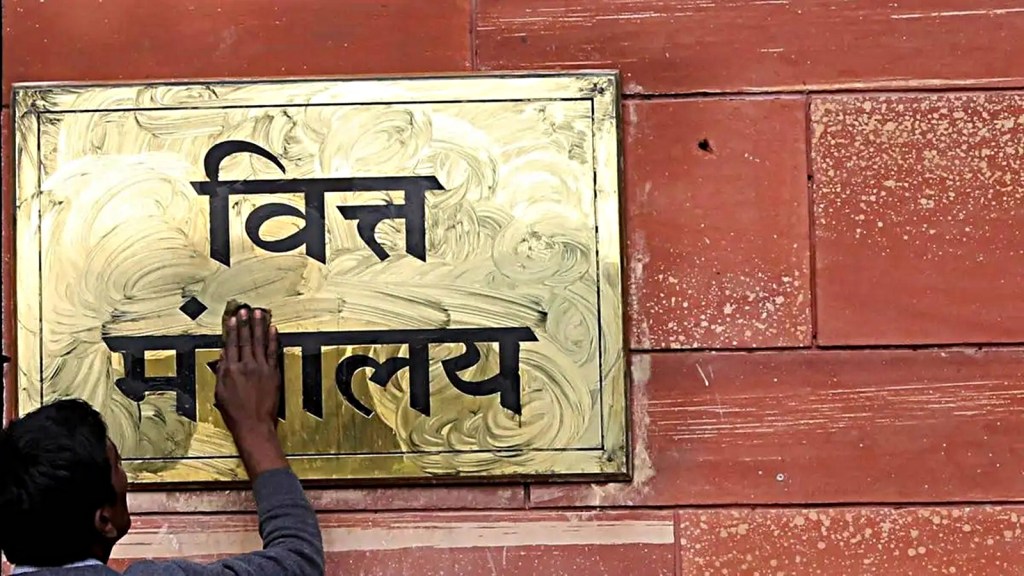
 The Union Budget for 2025-26 had announced a review of the 2016 model BIT to make it more investor-friendly and attract sustained foreign investment.
The Ministry of Finance has finished reviewing the model Bilateral Investment Treaty (BIT) and has sent it to the Cabinet Secretariat, a senior government official said, adding that pacts with 4-5 countries, including Canada, are expected to be soon finalised under the new framework.
“We should soon finalise 4-5 BITs, we have expedited them. These will be as per the new model framework, which is waiting to be approved,” the official said on the condition of anonymity.
A statement issued late last month after the Inaugural Canada-India Finance Ministers’ Economic and Financial Dialogue, attended by Finance Minister Nirmala Sitharaman, said that “India expressed its readiness to initiate negotiations on a Bilateral Investment Treaty at the earliest”.
The Union Budget for 2025-26 had announced a review of the 2016 model BIT to make it more investor-friendly and attract sustained foreign investment. While the aforementioned official said 20–25 BITs were signed on the basis of this model, “we have moved far away from it” in recent years when agreements were inked with the United Arab Emirates, among others.
“The new model BIT will absorb those agreements where we had moved far away from the 2016 model,” the source added.
While critics have called for the five-year local remedy period to be reduced to one year or be even done away with entirely, the government has stood its ground and said that it is important that the local judiciary is not ignored.
“People may have complained about India’s judiciary from time to time. But it has stood the test of time,” the official said, adding that “some red lines will not be crossed”.
To be sure, the government has shown a willingness to reduce the length of time for which local remedy must be pursued before international arbitration is sought. For instance, the BIT signed with the UAE in 2024 mandated local legal remedies be pursued for three years, lower than the five years in the 2016 model BIT.
A BIT is an agreement between two countries which spells out the rules governing private investment in either nation from companies in the other. As such, they help promote, protect, and provide clarity to foreign investments.
This would be especially beneficial at a time when India is struggling to attract money from abroad due to structural shifts globally: net Foreign Direct Investment (FDI) inflows in the first six months of 2026 have been $12 billion. While this is up from $3.1 billion in 2025 and $2.9 billion in 2024, it is far below $35 billion in 20022 and $53 billion in 2020.
A model BIT creates a standard template that can be followed whenever such agreements are being pursued with other countries. The model text is used as a guide and the final agreement between two countries depends on the negotiations that take place. At present, the Indian government follows the BIT model approved in December 2015 and adopted in January 2016.
However, that model has come under fire from various quarters, particularly because it mandated that domestic legal processes be pursued for five years to resolve disputes before international arbitration is sought. This clause, which did not exist prior to the 2016 model BIT, is seen as a hurdle for foreign investors.
Another red line is set to be the exclusion of any tax-related provisions from the model BIT.
“Tax will not go into the model BIT. It’s our sovereign right to tax, and that can’t be open to arbitration.”