


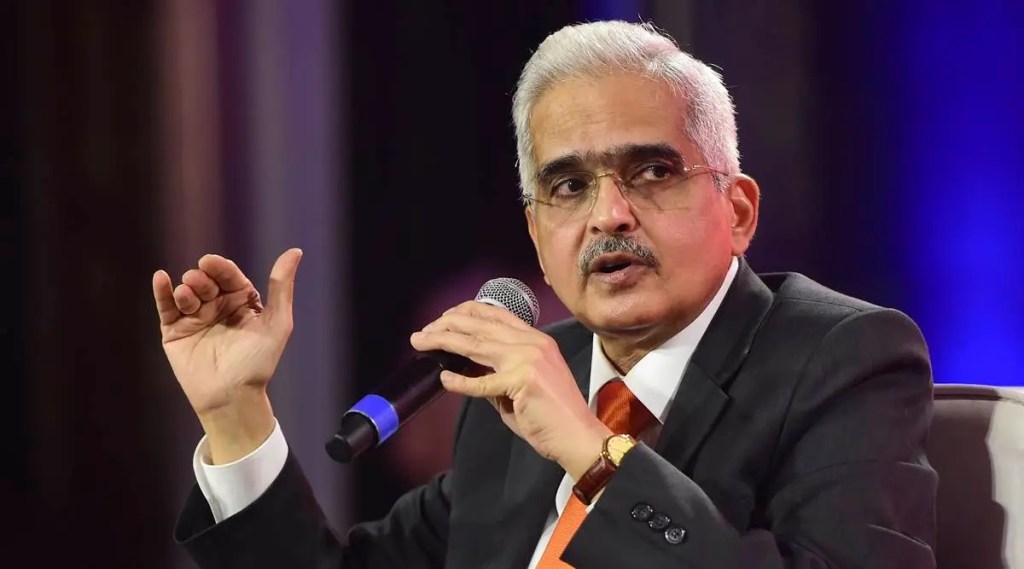


Listing inflation as a “major concern”, Reserve Bank of India Governor Shaktikanta Das on Saturday said the next inflation print for October will be lower than 7 per cent.
He, however, said it is premature to enter into any debate on revising the inflation target, adding that a tolerance band between 4+/-2 per cent gives enough policy space to use during periods of stress.
“We expect the October number which will be released on Monday to be lower than 7 per cent. Inflation is a matter of concern with which we are now dealing and dealing effectively,” he said, speaking at the Hindustan Times Leadership Summit 2022.
Das said the expected moderation in inflation in October will be due to measures taken by both the government and RBI in the last 6-7 months.
CPI inflation in September had risen to a five-month high of 7.41 per cent, primarily due to rise in food prices. The October inflation print is expected to moderate on the back of a favourable base effect.
For inflation targeting, Das said the target was set on an internal study as it was considered that a higher than 6 per cent inflation rate would hurt growth.
“RBI research at that point found, and even now it holds good, that inflation above 6 per cent for India will be detrimental to growth… if it is above 6 per cent for a prolonged period, financial savings will be hit, investment climate will be hit, India will lose the confidence of international investors. Any inflation above 6 per cent is detrimental to growth. Therefore, 6 per cent has been kept as the upper tolerance band. The fact that we have a tolerance band between 4-6 per cent gives RBI enough policy space to use during periods of stress,” he said.
Story continues below this ad
The Monetary Policy Committee, headed by the RBI Governor, has been mandated by the government to keep inflation within the 2-6 per cent range. The central bank is considered to have failed when average inflation breaches the 2-6 per cent tolerance range for three straight quarters. The September inflation print, which came last month, was the first instance of inflation breaching the mandate for the first time after the MPC framework came into effect.
On the Indian economy, Das said the macroeconomic fundamentals remain strong and growth prospects are looking good.
He said India will continue to be the fastest growing major economy with a likely growth rate of 7 per cent in 2022-23 on the back of strong macroeconomic fundamentals and financial sector stability.
The entire world, he said, has withstood multiple shocks. “I call it the triple shocks of Covid-19 pandemic, then the war in Ukraine, and now the financial market turmoil.”
Story continues below this ad
He said the market turmoil is mainly emanating from synchronised monetary policy tightening across the world by central banks, especially those in advanced countries, led by the US Fed, and the spillovers are being felt by the emerging market economies, including India.
In these kinds of successive turmoils, the European Union is facing a recession, but there are possibilities that it will avoid that. The US is holding stable, but there are other countries where growth has slowed down, he said.
“So far as India is concerned, economy, overall macroeconomic fundamentals, the financial sector stability, all these aspects remain resilient. The banking sector, that is the financial sector, is stable because of all the parameters with regard to banking or the non-banking lenders or the other major financial sector players,” he said.
The growth numbers are looking good in the current context, he said. “Our estimate is that India will grow by about 7 per cent. The IMF has projected that India will grow by about 6.8 per cent in the current year. And that puts India among the fastest growing major economies in the world,” he said.
Story continues below this ad
On observations that the RBI is using forex reserves indiscriminately, Das said “it’s not so”. The reserves are being accumulated for “rainy days”, he said.
“We built up these reserves only for this rainy day and when it rains, I have said it earlier also, you have to pick up your umbrella and use it. We didn’t pick up reserves just to keep it as a showpiece in the Reserve Bank of India. And even at this point of time, our reserves are very comfortable,” he said.
India’s foreign exchange reserves dropped by $1.09 billion to stand at $529.99 billion for the week ended November 4.