


 The latest CPI inflation print comes three weeks before the next meeting of the Monetary Policy Committee.
A range of indicators measuring prices rose in August, with the main gauge of household inflation rising to 4.82% from 4.45% in July – the highest in at least eight months – government data showed on Monday, bringing the focus on the October 5-7 meeting of the Reserve Bank of India’s Monetary Policy Committee (MPC), which could see the first interest rate hike in three-and-a-half years.
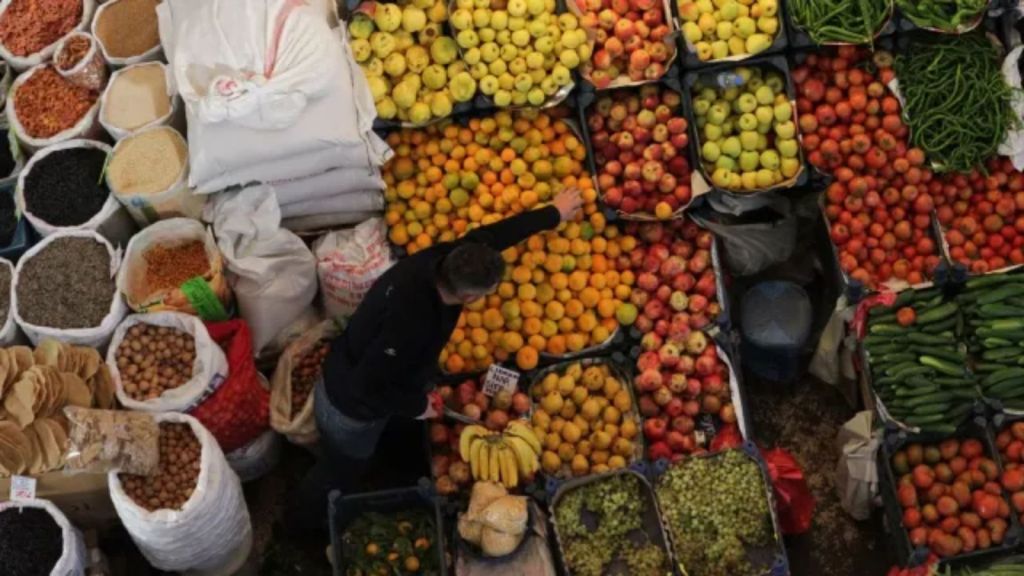
While food inflation as measured by the Consumer Price Index (CPI) rose to 5.95% in August from 5.52% in July, upward pressure in prices were clearly visible for several items, such as sugar and certain vegetables like onion.
The price index of sugar in the CPI surged by a massive 19% in August from July, with the price 24% higher compared to August 2025. Prices have jumped due to lower-than-expected sugar production and inventory falling to multi-year lows. In light of the soaring price of sugar – a key ingredient during the festival season for sweets – the government last month allowed duty-free imports of up to 10 lakh tonnes of raw sugar until October 31.
The price of onion, on the other hand, was up 22% in August compared to July, with the late rains delaying planting.
“The inflation outlook remains vulnerable to both external and weather-related risks,” said Rajani Sinha, Chief Economist at CareEdge Ratings. According to Sinha, while the RBI is likely to remain data-dependent, a sustained uptick in inflation “could strengthen the case for a rate hike in the coming months”. This makes the October meeting of the MPC “crucial to watch, especially as some major central banks have already embarked on a rate-hiking cycle”.
RBI’s inflation target
The latest CPI inflation print comes three weeks before the next meeting of the MPC. Minutes of last month’s meeting had shown that Governor Sanjay Malhotra and Deputy Governor Poonam Gupta were both hinting towards an increase in interest rates. The MPC last increased the repo rate in February 2023.
The RBI is legally mandated to keep CPI inflation at 4% in a band of 2-6%. However, this is the third month in a row that headline retail inflation has come in above 4%. The central bank, which last month left the policy repo rate unchanged at 5.25%, expects CPI inflation to average 4.7% in July-September, 5.9% in October-December, 5.5% in January-March 2027, and 5.3% in April-June 2027.
With inflation ticking up and the economy far more robust than anyone had expected – GDP growth was a surprisingly strong 7.8% in the first quarter of 2026-27 – more and more economists have been warning that the MPC must soon increase interest rates. Although CPI inflation has and is expected to remain within the 2-6% band of the RBI, there are fears of price pressures spreading from food and fuel to other categories.
Price pressures broadening
In a sign that price pressures may be broadening, as many as 314 of the 358 items in the CPI saw higher prices in August compared to July. The number was 310 in July and 236 in February, before the war in West Asia had begun.
Meanwhile, the number of items whose inflation was more than 4% rose to 110 in August from 101 in July.
Signs of higher prices becoming “structural” was also visible in wholesale inflation numbers, according to Devendra Pant, Chief Economist at India Ratings & Research. This, Pant said, could be seen in the fact that wholesale inflation of seven sub-categories of the manufacturing sector – tobacco products, textiles products, chemical products, rubber and plastic products, base metals, electrical equipment and other manufacturing – has remained above 10%. These seven categories make up more than a quarter of the manufacturing group, which in turn accounts for almost two-thirds of the entire WPI.
US Fed decision this week
Policy action is also seemingly expected from the US Federal Reserve, which will announce its own interest rate decision on Wednesday.
Markets are expecting the US central bank to hike the federal funds rate target range by 25 bps to 3.75–4% after inflation data released on Friday showed American consumer prices rose 0.4% month-on-month in August as against a 0.1% increase in July, with the year-on-year headline inflation rate steady at 3.4%.
“We recently changed our fed funds (rate) view to forecast a mini 75 bps tightening cycle,” ANZ economists led by Brian Martin said on Monday. “We had pencilled in December for the start of that but acknowledged that poor September inflation data could see the cycle start earlier. This is now the case.” Martin now expects the US Fed to raise interest rates by 25 bps this week, followed by further hikes in October and December to take the key rate to 4.25–4.50%.
Cues from wholesale prices
Hours before the household inflation numbers, the commerce ministry released Wholesale Price Index (WPI) data for August, which showed that wholesale inflation rose to 9.92% from 9.78% in July. This increase was driven by food and fuel prices, with Rahul Agrawal, Principal Economist at ICRA, noting that wholesale food inflation hitting a 20-month high of 7.05% in August was largely due to higher prices of fruits, vegetables, milk, spices, and sugar.
“We expect food inflation to harden further in September-October on the back of an unfavourable base, as well as the stronger-than-usual sequential hardening in prices of some food items such as sugar, which could sour sentiment during the festive season,” Agrawal said.
‘Sequential hardening’ refers to a rise in price from one month to the next.
According to Rajeev Sharan, Head of Research at Brickwork Ratings, the “main risk” to household inflation, in addition to any rise in crude oil prices and fresh volatility in vegetable prices, is high wholesale food and input costs eventually being passed on to consumers.
Output PPI rises, input falls
In addition to the WPI, the commerce ministry also released producer price data for August on Monday, with inflation based on the output Producer Price Index (PPI) edging up to 9.81% from 9.57% in July.
The output PPI is a new measure of inflation at the factory-gate level and is not very dissimilar from the WPI. However, the output PPI excludes indirect taxes and trade and transport margins. It is expected that the WPI will be phased out by 2031, by when the output PPI will become the default measure of inflation for producers. MoSPI is already using the output PPI to ‘deflate’ nominal GDP to arrive at real estimates.
Meanwhile, the input PPI – which is currently being released on a trial basis for the manufacturing sector – fell 1.6% month-on-month in August from July. This decline was almost entirely driven by ‘other manufacturing’ and ‘manufacture of coke and refined petroleum products’, whose price indices slumped 14% and 13%, respectively, in August from July. These two groups together make up 16.1% of the entire input PPI and therefore exert strong influence over the headline number.