


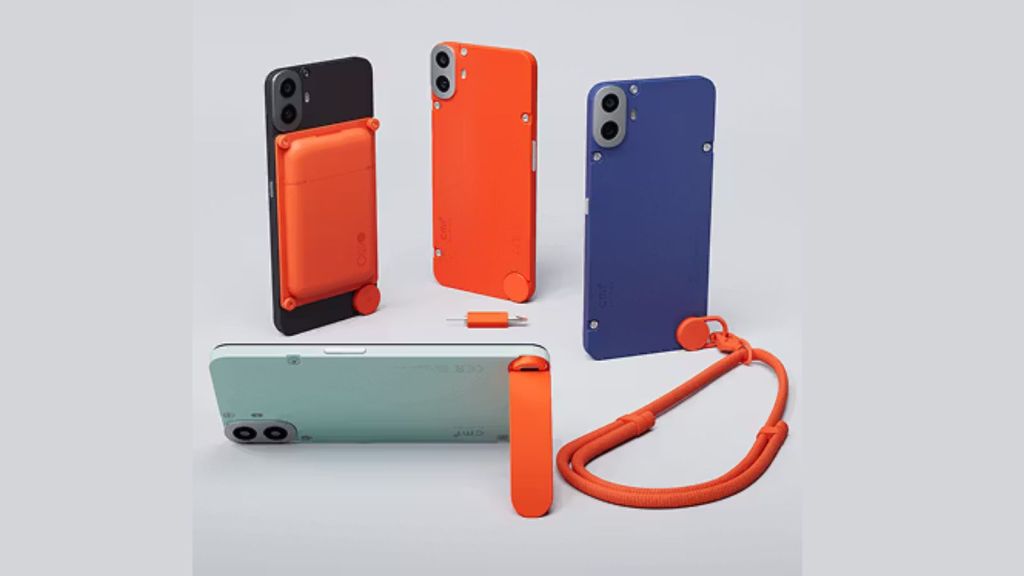
 For CMF, Pei said the focus would therefore be on developing products in India rather than simply manufacturing them in the country.
Smartphone maker Nothing’s Co-founder and Chief Executive Officer (CEO) Carl Pei has said the company will spin off its CMF sub-brand into a standalone Indian company, with the new entity to be majority-owned by Indian shareholders and headquartered in India. Nothing will retain a stake and continue as a shareholder and partner, while CMF will have its own team and research and development operations in the country.
In an open letter, Pei said the move was aimed at building a global consumer electronics brand from India, arguing that the country’s next stage of growth in the sector would have to go beyond manufacturing and focus on product engineering, R&D and intellectual property.
“CMF becomes Indian,” Pei said, adding that the new company would be “majority Indian owned, headquartered in India, with its own team and R&D in the country”. Nothing’s engineering capabilities, operating system, supplier relationships and global brand infrastructure would continue to be part of the partnership.
Pei’s announcement comes shortly after the Indian government notified its new Rs 62,500 crore Mobile Phone Manufacturing Scheme (MPMS), which explicitly seeks to encourage Indian-owned mobile phone brands and domestic design and R&D.
The scheme has two target segments: one for mobile phone manufacturing and another specifically for Indian brands. Under the Indian-brand segment, eligible companies can receive an incentive of 5% on eligible sales, along with an additional 3% incentive linked to Indian design and R&D. There is also an additional incentive of up to 1.5% for domestic sourcing of key components and sub-assemblies.
To qualify as an Indian brand under the scheme, a company must be incorporated in India, hold its intellectual property and trademark in India, have management control with Indian citizens and have more than 51% shareholding held by Indian citizens. It must also have in-house R&D and design capabilities in India.
The government has said the scheme is intended to move India beyond being a manufacturing base and encourage Indian ownership of brands, technology and intellectual property. India currently manufactures almost all mobile phones sold domestically and is the world’s second-largest mobile phone manufacturer by volume, but has little to show for in terms of domestic smartphone brand successes.
Pei said India had already built much of the manufacturing base needed to become a global electronics hub, but lacked a globally competitive consumer electronics brand with substantial in-house engineering capabilities. He pointed to Japan, South Korea and China as examples of countries that developed global brands after building manufacturing ecosystems.
He also contrasted India’s current position with its smartphone market a decade ago. According to him, Indian brands accounted for close to half of smartphone sales in 2015 but subsequently lost ground to foreign brands that brought stronger engineering capabilities, including improvements in cameras, design and hardware-software integration. He said Indian brands had fallen to less than 1%of the market by 2025.
For CMF, Pei said the focus would therefore be on developing products in India rather than simply manufacturing them in the country. He identified areas including industrial design, camera systems, operating systems, antennas and the co-engineering of displays, chipsets and camera modules as examples of what he considers “real R&D”.