


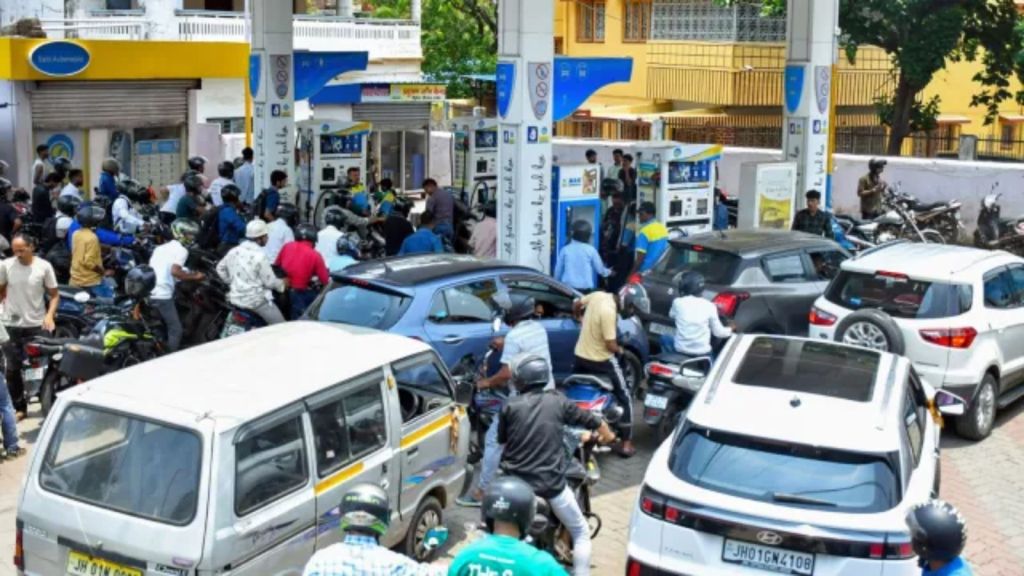
 The spurt in purchases by bulk buyers was putting pressure on the local fuel stocks at retail pumps, which is one of the reasons why private players put volume caps at some of their outlets (File Photo)
The government will ask private sector fuel retailers to not place limits on volumes of diesel and petrol sold at their retail outlets as unilaterally imposing such caps is not allowed, Petroleum Secretary Neeraj Mittal told reporters Thursday. Mittal’s comments came in response to a question regarding private fuel retailers Nayara Energy and Jio-bp limiting retail diesel at some of their pumps amid a widening gap between retail fuel prices and prices for bulk consumers, and negative margins on retail fuel sales.
“Nobody is allowed to put a cap on fuel sales. If they are putting a cap on sales, we will take it up. We will tell them that it is not acceptable, it is not done. In the past also, letters had been issued, instructions had been issued. So the same thing applies even today. There is no change in the government’s view on this,” Mittal said. Petroleum Minister Hardeep Singh Puri said that his ministry is in regular touch with private fuel retailers, but didn’t go into details.
Private sector fuel retailers have a share of less than 10% in India’s fuel retail network, with the three public sector fuel retailers — Indian Oil, Bharat Petroleum, and Hindustan Petroleum — controlling a massive market share. This gives them almost undisputed pricing power in India’s massive fuel retail segment, with private retailers usually following their prices.
The public sector players have kept retail petrol and diesel prices unchanged since May despite the recent surge in international prices, in effect keeping the prices artificially lower in a bid to shield retail consumers from price shocks. This is leading to heavy under-recoveries on retail fuel sales, even as bulk diesel prices are kept in line with international rates. Even when prices were hiked in May, the increase passed on the price pressure only partially. Last week, ratings agency ICRA had estimated that the public sector fuel retailers were incurring daily fuel marketing losses of about Rs 530 crore.
According to sources, there currently is a gap of as much as Rs 50 per litre between retail and bulk diesel prices, prompting large consumers — which include telecom companies, factories, and hotels, among others — to lift cheaper fuel from pumps, which is actually meant for vehicles, sources indicated. In some cases, up to 600 litres of diesel were being lifted by consumers in one go, which far exceeds what regular vehicles purchase. Jio-bp has capped diesel sales at 50 litres per consumer per day at some of its outlets, while the daily cap at Nayara Energy pumps varies between 70 litres and 200 litres per customer.
The spurt in purchases by bulk buyers was putting pressure on the local fuel stocks at retail pumps, which is one of the reasons why private players put volume caps at some of their outlets, they said. The other reason, according to them, is the negative margins on retail fuel sales, which makes bulk sales, sales to other fuel retailers, and exports a lot more lucrative for the private players.
In May-June, amid a similar situation when the delta between bulk and retail diesel prices was quite high, even public sector fuel retailers saw pressure on fuel stocks at their retail outlets as bulk and industrial consumers increasingly switched to buying from fuel pumps instead of the designated bulk sales points. This led to localised demand spikes and supply issues.
On June 12, the government itself placed limits of 200 litres per consumer per day on diesel sales at the retail outlets of Indian Oil, Bharat Petroleum, and Hindustan Petroleum through an official order. The order, which was issued for a 90-day period, also prohibited bulk and industrial buyers from lifting diesel from retail outlets, directing them to stick to bulk fuel sales points.