


Journalism of Courage
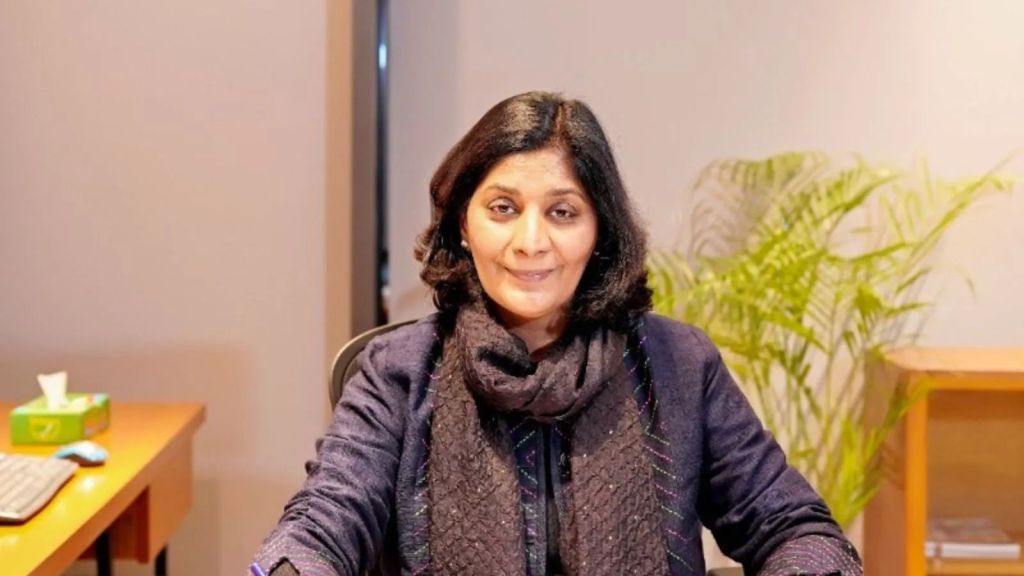 Capital account, too, should turn more favourable, plausibly from later this financial year and then remain so, said RBI Deputy Governor Poonam Gupta. (File photo)
The Reserve Bank of India (RBI) sees the Indian financial markets improving over a period of time, with a case for the rupee to claw back some of the underperformance it has seen against the dollar.
Factors such as the country’s falling dependence on imported crude oil in the wake of alternative energy sources, strong economic growth, capital account turning more favourable, and further reduction in the current account deficit (CAD) will lead to this improvement in the performance of Indian markets, said RBI Deputy Governor Poonam Gupta.
“Put together, these arguments indicate that one may think of the cumulative depreciation of the INR, or shall one say its overcorrection in the past year and a half, to be a temporary phenomenon. With the RBI remaining committed to ensuring orderly conditions in the foreign exchange market, and having the wherewithal to meet decades worth of CAD, or the net BOP (balance of payments) deficit, the current market dynamics do not appear especially well-founded,” Gupta said, speaking at the State Bank of India’s Banking and Economic Conclave in Mumbai, on Wednesday.
“If anything, there seems to be a fair case for the rupee to not just stabilise, but perhaps even appreciate from the current levels, as was being anticipated by the market analysts when the capital flow measures were first announced,” Gupta added. The rupee has been among the worst-performing currencies in Asia, falling approximately 6-7% against the dollar so far in 2026, and breaking multiple crucial levels. The fall has been fuelled by factors such as high crude prices and significant capital flight from the equity market.
Meanwhile, the Securities & Exchange Board of India (SEBI) is considering longer-tenure derivatives products to encourage healthy investor participation, its chief Tuhin Kanta Pandey said at the conclave.
High oil prices have also kept the country’s CAD under pressure, but Gupta believes a shift to alternative sources and normalisation of oil prices will help. “Meanwhile, the rest of the trade basket is responding well to the new trade opportunities being leveraged, a strength that will continue with the positive impact of recent FTAs materialising, and a conducive exchange rate,” she added.
Capital account, too, should turn more favourable, plausibly from later this financial year and then remain so. Several factors point towards this: stretched valuations elsewhere, the AI-mania saturating, strong domestic macroeconomic fundamentals, a high real and nominal GDP growth helping improve the earnings guidance, a domestic investment cycle gathering pace, healthy balance sheets of banks and corporates, continuing measures to attract variety of capital into the country, trend increase in FDI, and, in due course, the inevitable inclusion of Indian bonds in more global indices,” said Gupta.
She said artificial intelligence (AI) is “an unspent force” for the country. “Just as India has leveraged the potential of digital innovation thus far, it will leverage the potential of AI equally well going forward, while avoiding the risks,” she added.
At the same event, Pramod Kumar Mishra, Principal Secretary to the Prime Minister, emphasised the need to maintain a balance between lending and growth.
“The cleanup of the banking system required considerable resources and time. Those resources could otherwise have supported productive investment. We should therefore preserve the institutional memory of that episode,” said Mishra.
“Credit must be appraised against the economics of the project rather than the enthusiasm of the moment. That is the surest protection against a repetition of the cycle of excessive lending, stressed assets, and subsequent cleanup,” said Mishra.
His comments come at a time when liquidity is at a surplus in the banking system, with bad loans at record lows. Following strong inflows from the RBI’s foreign currency non-resident (FCNR-B), liquidity in the banking system had surged to Rs 11 lakh crore earlier this month.
After central bank’s open market bond purchases and variable rate reverse repo (VRRR) operations, this liquidity has since come down to around Rs 4.5 lakh crore-Rs 5 lakh crore, according to analysts.
“SEBI is open to reviewing and potentially lowering margin requirements for longer-tenure derivative products to encourage healthier, long-term participation in the Futures & Options (F&O) market,” the markets regulator’s Chief Tuhin Kanta Pandey said on the sidelines of the conclave in Mumbai.
His comments come at a time when retail traders continue to face significant losses despite a plethora of steps taken by the regulator and the Finance Ministry to discourage “speculative trading”.
A study by the regulator last month showed that despite signs of retail participation cooling for the first time in at least five years, nearly nine in 10 individual traders continued to face losses in 2025-26, as the average loss per trader rose 2% year-on-year to Rs 1.17 lakh crore.
Despite these steps, Pandey clarified that investor protection and promoting ease of doing business go hand-in-hand. “Optimum regulation can reduce unnecessary friction. Our objective is therefore to make markets easier to access, while preserving the trust on which those markets are built,” he said.