


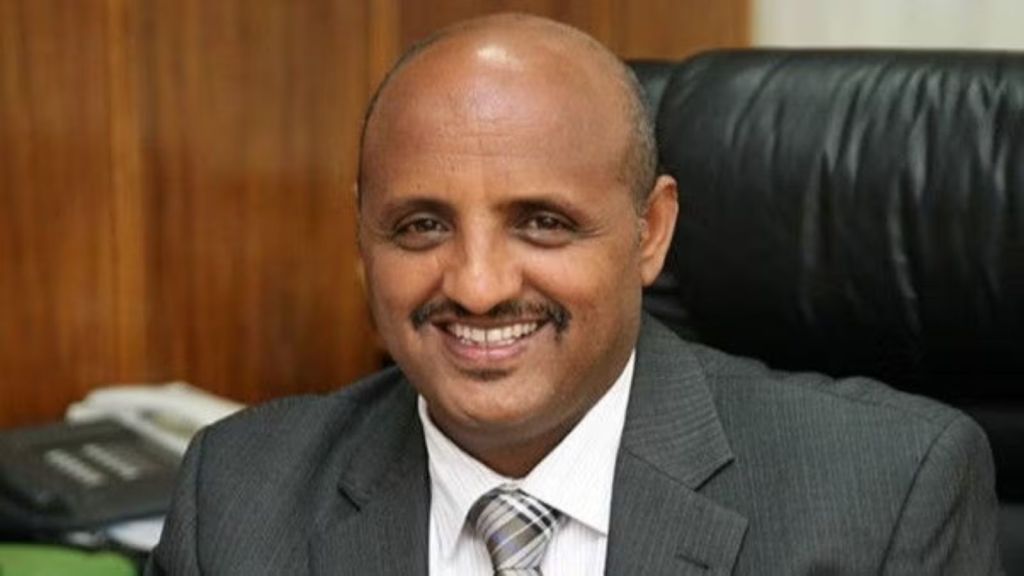
 Gebremariam oversaw one of aviation’s most successful long-term transformations (Image: Air India)
Incoming Air India chief executive Tewolde Gebremariam listed safety, operational reliability, and profitability as key priorities for the Tata group airline’s next phase of growth. Addressing a company-wide townhall meeting on Monday, Gebremariam told the airline’s employees that Air India has made significant progress since its return to the Tata group in early 2022, while emphasising that substantial opportunities remain ahead as the carrier continues in its pursuit to become a world-class global airline and achieve profitability. He also said that cost discipline must become part of the airline’s culture.
“Everything we do must be safe. Safety is a shared responsibility, and every Air Indian has a role to play. We must continue to foster a culture where people are empowered to speak up, raise concerns and report issues without hesitation,” said Gebremariam, who will take over as Air India’s CEO and MD once all regulatory approvals to his appointment come in.
He said safety would remain the airline’s foremost priority and guiding principle, and encouraged employees to remain vigilant and proactively report anything they observe that could impact operational safety. “If you see something, say something. The stronger our reporting culture, the stronger our safety culture,” he told staff.
Gebremariam is taking over the reins at Air India at a crucial juncture for the airline — in the aftermath of the deadly AI 171 crash in June last year and intensified scrutiny of the carrier’s operational safety, and amid external headwinds like the Pakistani airspace closure and surging jet fuel prices due to geopolitical conflict in West Asia. Operationally safety at Air India is again in focus following one of its pilots tested positive for drug use and another failed an alcohol breath analyser test just before operating a flight.
Gebremariam oversaw one of aviation’s most successful long-term transformations, turning Ethiopian Airlines into a global airline and the largest carrier in Africa, and turned Addis Ababa into a major aviation hub. He also has a track record of driving sustained profitability while navigating complex economic cycles and dynamic and challenging global markets. Gebremariam will be steering the loss-laden airline through the next phase of its ambitious transformation programme.
Various aspects of Air India’s transformation — from pilot training to maintenance practices and operational decision-making — will also be judged through the lens of safety as the shadow of the AI 171 crash still looms. Passengers, regulators and investors will all expect evidence that safety systems, operational oversight, and organisational culture are improving continuously.
Gebremariam told employees that the “heavy lifting” of Air India’s transformation programme has already been done over the past few years, including the complex merger and integration of Air India and Vistara. Along with the merger of these two airlines, the Air India group has also merged its budget airlines Air India Express and AIX Connect into one airline — Air India Express.
Under outgoing CEO Campbell Wilson — Air India’s first post-privatisation chief executive — the carrier embarked upon an ambitious transformation programme to shrug off its legacy image of a rundown government-owned airline. Despite the challenges that the airline has been grappling with, the foundational parts of its transformation plan have been executed under Wilson’s watch.
A new brand identity is in place, group airlines have been consolidated into two from four, synergies in their networks and operations has gone up considerably, massive aircraft orders are in place to ensure a steady stream of new jets, a large number of its legacy jets have been given modern cabins and more are being retrofitted, heavy investments have been made in technology and other key areas, and hiring for key operational roles is being done on a continuous basis.
“Over the past four years, a great deal has been achieved. At the same time, there remains significant opportunity ahead of us. That is what makes this an exciting moment for Air India and for all of us,” the incoming Air India CEO said, adding that India’s favourable demographics, strong economic growth, geographic position and large global diaspora provide a unique foundation for the airline’s future success.
“These factors give us confidence that if we execute well and remain focused on our customers, Air India can become not only one of the largest airlines in the world, but among the very best,” Gebremariam said, while also noting that the airline is operating in a challenging environment marked by geopolitical conflict, airspace restrictions affecting Indian carriers, elevated fuel prices, and uncertainty in key international markets.
In the face these external headwinds, which have placed roadblocks on Air India’s path to profitability, Gebremariam told staff that achieving sustainable profitability will be a key objective for the airline as it implements the next stages of its transformation plan and it can’t afford to lose focus on improving its financial performance.
“We must improve both revenue and cost performance. Revenue enhancement initiatives are already under discussion, including opportunities across our international network, commercial activities and cargo business…Cost management is not just the responsibility of leadership or the finance function. Every employee can contribute to savings, and those savings add up across an organisation of our scale,” he said, adding that Air India plans to introduce programmes that reward ideas that generate measurable cost savings and operational efficiencies.
While saying that growth and scale are critical in the airline business, which is characterised by high capital investment, significant fixed costs, and intense competition, Gebremariam emphasised to staff that growth also needs to be profitable and sustainable.
“Growth is the oxygen of business. But growth must also be profitable and sustainable. We will pursue expansion in a disciplined manner and ensure our people, fleet and network are ready to support it,” he said. Air India continues to evaluate opportunities to enhance network efficiency, optimise fleet deployment, and rebalance operations to improve long-term competitiveness, the incoming CEO added.
Gebremariam served in Ethiopian Airlines for over 36 years, 11 of which were as group CEO. He took an early retirement from the airline in March 2022 due to health issues, and was a senior strategic advisor to Delta Air Lines of the US until recently. For Air India, which is attempting a highly ambitious airline turnaround, Gebremariam’s experience would be particularly relevant, according to industry watchers.