9 min read

© IE Online Media Services Pvt Ltd



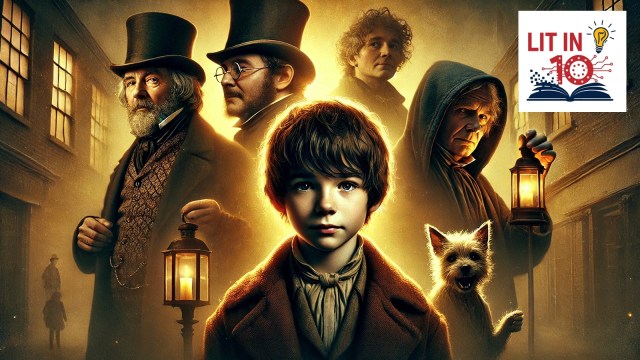 Charles Dickens’ Oliver Twist remains one of the most iconic fictional orphans. (Generated using AI)
 “Please, sir, I want some more.”
Softly, young Oliver Twist asks for a second helping of gruel — an innocent plea which is also a powerful act of defiance. The scene sits at the heart of Charles Dickens’ novel Oliver Twist: the story of a child’s struggle against a cruel system.
The novel is set in the underbelly of 19th-century Victorian London. It follows young Oliver’s journey from an orphanage to a workhouse to the world of crime and cruelty – before he finally finds care and warmth. It was a powerful indictment of England’s broken social safety net in which the poor were granted food and clothing in exchange for labour in dehumanising workhouses.
One of the most iconic fictional orphans, Oliver Twist is rivaled perhaps only by JK Rowling’s Harry Potter. When time allows, do dive into the original. Its portrait of poverty, justice, and survival in a fractured society remains as powerful today as ever. This edition of ‘Lit in 10’ breaks down the novel into images of 10 defining moments. Scroll down.
 Oliver Twist is born in a grimmy English workhouse to a woman who dies moments after childbirth. (Generated using Open AI)
A child is born in a grim English workhouse to a young woman who dies moments after childbirth. Her name is never recorded. The parish surgeon delivers the child, and a drunken pauper nurse mutters a half-hearted blessing. There are no celebrations, only bureaucratic procedures to welcome his arrival. Mr Bumble, the parish beadle, gives him the name “Oliver Twist” as part of an alphabetical system (following “Swubble” and preceding “Unwin”). “Badged and ticketed,” the orphaned Oliver is reduced to a number.
 The iconic scene where Oliver Twist says, “Please, sir, I want some more.” This daring moment turns his hunger into an act of political defiance. (Generated Using Open AI)
Fed on a diet of thin gruel and endless sermons, Oliver and other boys endure sanctioned suffering. After drawing lots, Twist is chosen to request another portion of food. His plea, “Please, sir, I want some more,” shocks the authorities and brands him as a troublemaker. The outraged board of guardians decides to remove him from the workhouse, offering five pounds to anyone willing to take him. This moment marks Olivers first resistance to injustice. The iconic scene turns hunger into an act of political defiance.
 Oliver Twist escapes being apprenticed to the cruel chimney sweep Mr Gamfield by the skin of his teeth. (Generated using AI)
A cruel chimney sweep named Mr Gamfield offers to take Oliver Twist as an apprentice.The man known to have “bruised three or four boys to death.” He wants a small boy to force into narrow chimneys, to get a five-pound bonus. The board, eager to rid themselves of Twist, almost agrees. But Oliver’s visible terror before the magistrate, his pale face and pleading eyes, spares him.
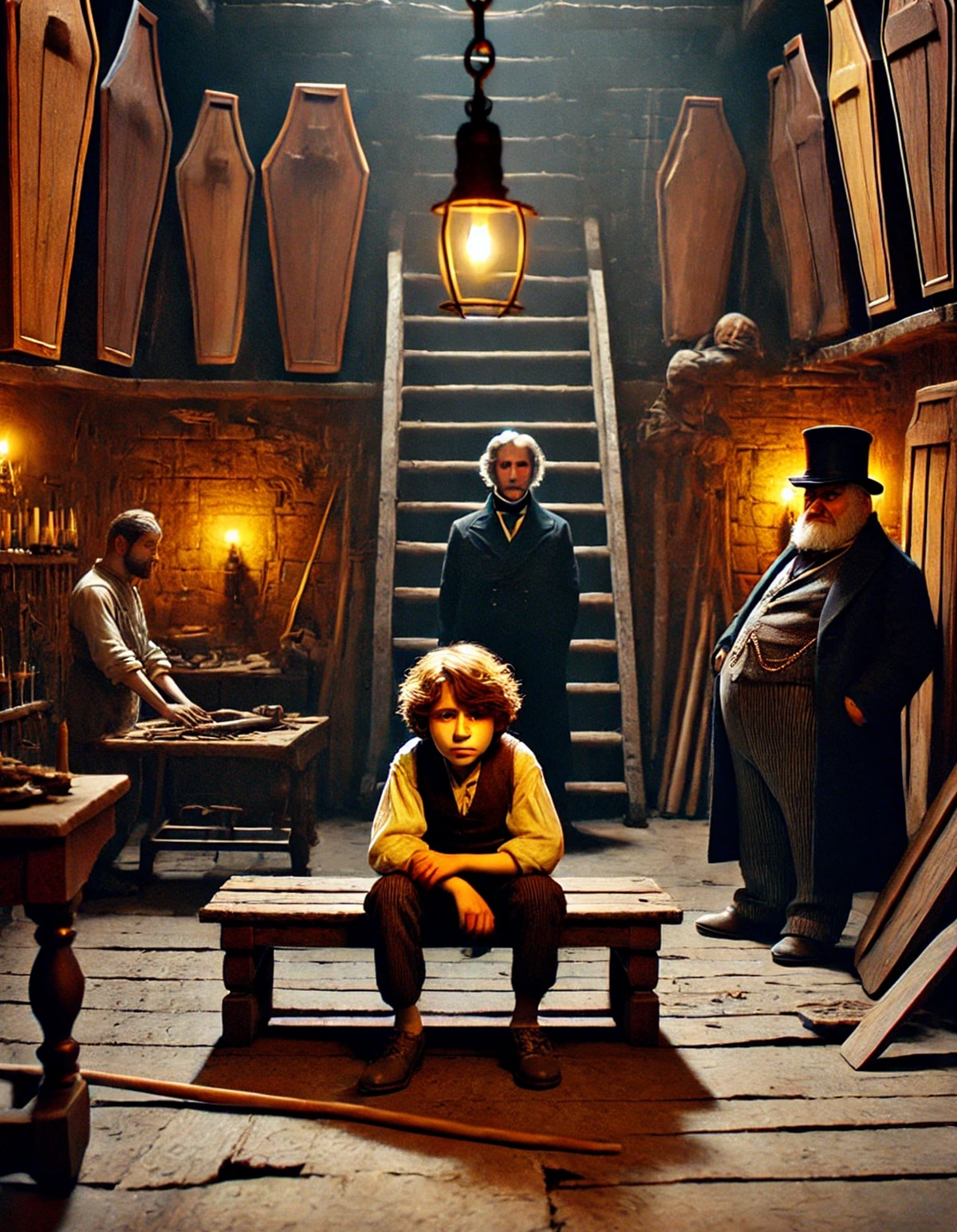 Oliver is apprenticed to Mr Sowerberry, an undertaker, but his quality of life does not improve. (Generated using Open AI)
Oliver is apprenticed to Mr Sowerberry, an undertaker instead. He sleeps under the counter near empty coffins and eats leftover scraps meant for the dog. For the first time, he earns a wage. When the undertaker’s apprentice, Noah Claypole, insults Oliver’s dead mother, he lashes out in rage. The punishment that follows is swift and brutal. The funeral trade becomes a metaphor, Twist is alive, but surrounded by death in every sense.
 Oliver Twist meets the iconic Artful Dodger a streetwise boy who introduces him Fagin and his gang of pickpocketing children. (Generated using Open AI)
Beaten, starved, and unwanted, Oliver runs away to London. The journey is long, hungry, and dangerous. On the final stretch, he meets Jack Dawkins, better known as the Artful Dodger, a streetwise boy who offers him shelter. The Dodger leads Oliver to a new “home” under Fagin’s roof. This is a trap.
 Oliver Twist in Fagin’s den, which has a bunch of curios. (Source: Generated using Open AI)
Oliver’s new family is a gang of pickpockets overseen by Fagin, who grooms children for theft. Fagin offers food, shelter, and even affection, but at a price. In his den, lined with stolen watches and silk handkerchiefs, Oliver is taught to steal without understanding it is a crime.
 Mr Brownlow offers Oliver Twist a refuge, books and clean clothes. ( Generated using open AI)
On his first outing, Oliver is wrongly accused of pickpocketing a kind gentleman, Mr Brownlow. But instead of punishment, Brownlow offers him refuge. In his home, Oliver gets warmth, books, and clean clothes, and feels he might be loved. It is a short interlude of peace. This sanctuary is snatched from him when Fagin’s gang violently abducts Twist.
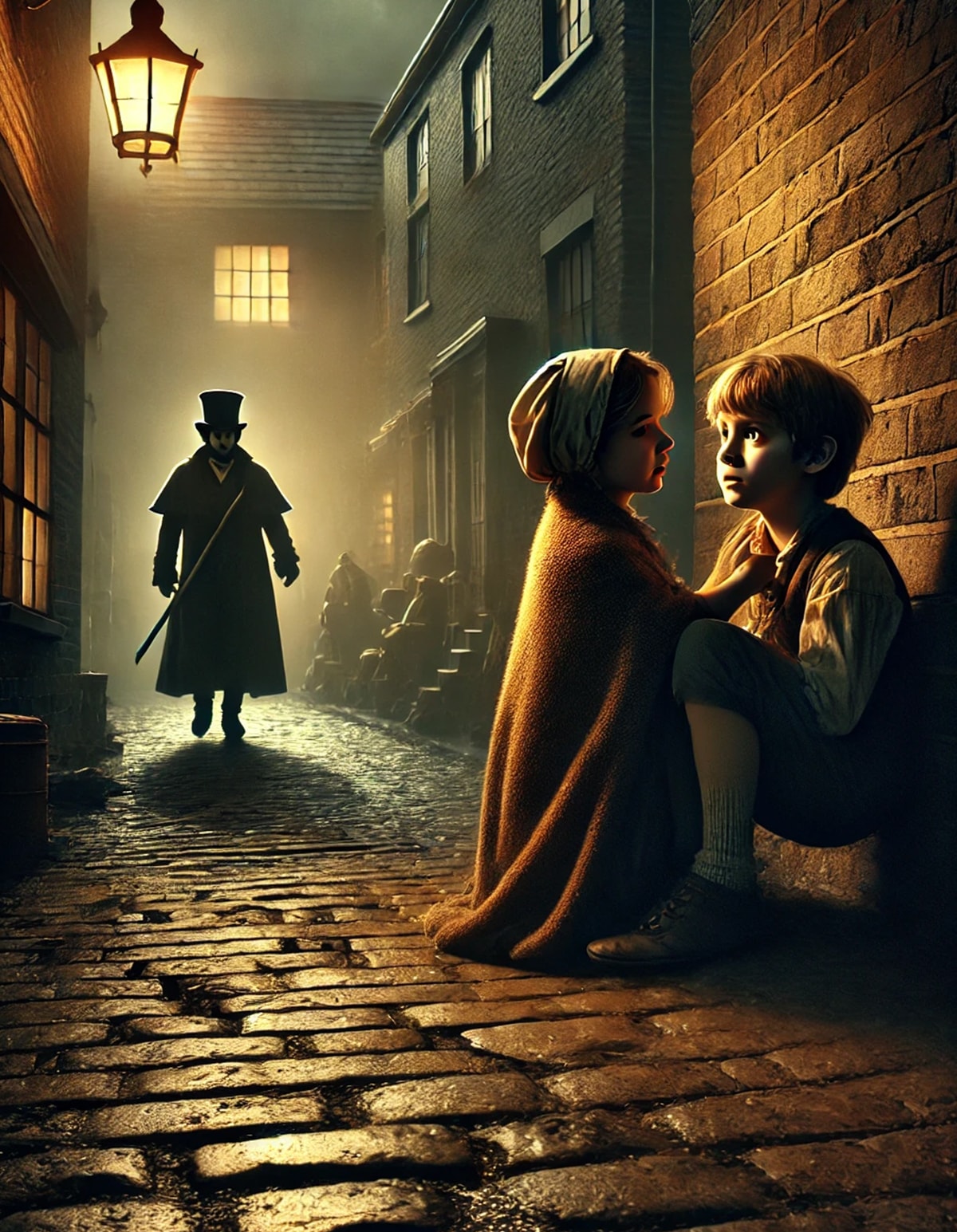 Nancy abducts Oliver Twist, but later protects him from Bill Sikes. (Source: Generated using Open AI)
Oliver is forced to assist in a house burglary by the violent Bill Sikes. Nancy, Sikes’s companion, secretly helps Oliver and later takes a great risk in informing Mr Brownlow of the boy’s whereabouts. She sees her younger self in Oliver and in trying to help him, seeks redemption.
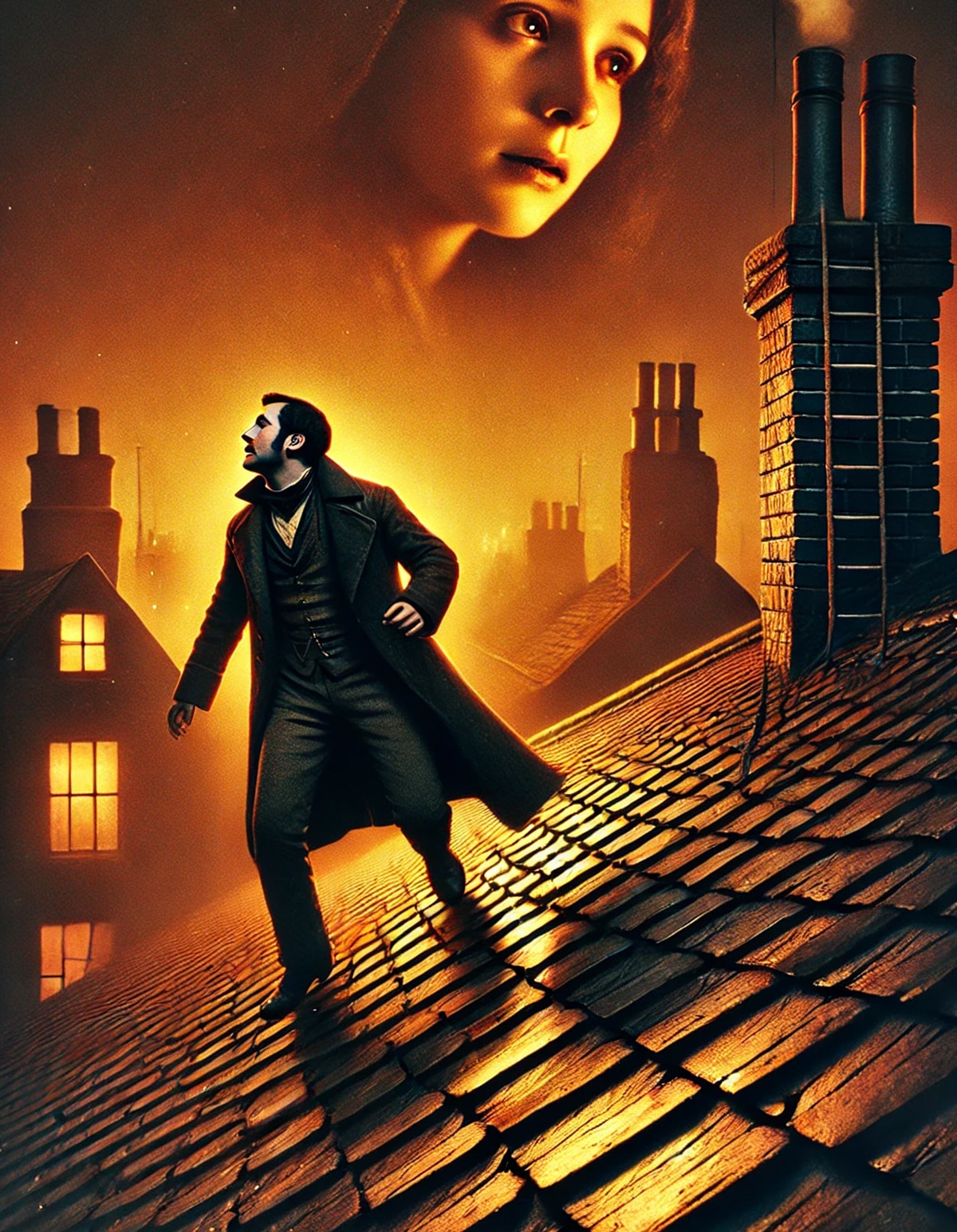 Bill Sikes, a violent man, ends up murdering Nancy, but deeply regrets it. (Source: Generated using Open AI)
Sikes, paranoid and cornered, brutally murders Nancy. His descent into guilt and madness mirrors the city’s shadows, cloaked, chaotic, inescapable. Hunted by mobs, Sikes accidentally hangs himself trying to flee across a rooftop. The murder of Nancy, though horrific, becomes the event that finally causes the collapse of the criminal world that Oliver Twist captive.
 All’s well that ends well. Mr Brownlow formally adopts Twist, who has an inheritance. (Source: Generated using Open AI)
Finally, Oliver is revealed to be the son of a naval officer and the rightful heir to an inheritance. The people who mistreated or exploited him—Fagin, Sikes and Bumble—are exposed or punished. Mr Brownlow formally adopts the boy.
So, what makes this a literary classic? For me, it is Dickens’ empathetic and layered portrayal of criminality. He does not romanticise crime like the popular Newgate novels (named for a London prison that was destroyed in a fire in 1780). Instead, he draws a realistic portrait of London’s seedy underbelly and those who inhabit it. Dickens’ criminals are neither evil nor heroes rebelling against an unjust society, they are human beings struggling to survive in an apathetic city. They are people shaped, and often broken, by an uncaring system.
Who is the greater criminal: Fagin, who gathers those discarded by society into a makeshift family; or Judge Fang, the cold embodiment of institutional cruelty? One preys on the desperate, the other represents a system that created that desperation. Dickens does not offer easy answers. Fagin is manipulative, yet provides laughter and shelter. Nancy is both kidnapper and protector. Even Bill Sikes, brutal as he is, is more than a monster, he is the product of poverty and pain.
In a novel full of morally ambiguous characters, Oliver’s unblemished innocence may seem implausible, but perhaps he is not meant to be realistic. Instead, he serves as a moral anchor, a fixed point of purity around which the chaos of the city swirls. Dickens uses caricature and satire to great effect to expose the hypocrisy of respectable society.
Oliver Twist’s characters have entered the popular imagination, and its themes have inspired generations of writers and reformers to confront injustice with empathy. It has been adapted both for stage and screen, and the iconic musical, Oliver!
(Disclaimer: Lit in 10 aims to distill the essence of great works, not to replace them. To fully experience Dickens’ humor, horror, and heart, the original novel is still essential reading.)