


© The Indian Express Pvt Ltd
Tags:


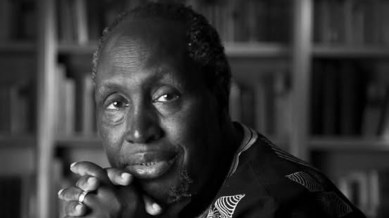
The literary world mourns the loss of Ngũgĩ wa Thiong’o, the Kenyan novelist, playwright, and essayist whose revolutionary vision reshaped African literature. He died on May 28, 2025, at the age of 87. Few writers have wielded the pen with such political urgency or linguistic daring. From his early, searing portraits of colonial Kenya to his later, sprawling satires of dictatorship, Ngũgĩ’s work was a lifelong act of defiance—against empire, against oppression, and against the very language in which he first wrote.
Born in 1938 in Limuru, Kenya, under British rule, Ngũgĩ came of age amid the Mau Mau rebellion, an experience that seared itself into his fiction. His debut, Weep Not, Child (1964)—written while he was a student at Makerere University—was a landmark, the first English-language novel published by an East African. Its lyrical yet unflinching depiction of a boy’s shattered dreams in a war-torn land announced a major new voice.


Upon release, he fled Kenya, living in exile for over two decades. Yet his literary output never slowed. Works such as Matigari (1986) and Wizard of the Crow (2006)—a magisterial, genre-defying satire of dictatorship—proved that African-language literature could be as ambitious, as experimental, and as globally resonant as any written in English or French.
His 1986 manifesto, Decolonising the Mind, remains essential reading in several countries, including India, is a blistering indictment of the “cultural bomb” of colonialism and a rallying cry for linguistic sovereignty. “Language,” he wrote, “is the most important vehicle through which that power fascinates, holds, and blinds the African.”
Though often tipped for the Nobel, he never received it—an omission that speaks less to his stature than to the biases of literary prestige. His influence, however, is immeasurable. Writers from Chimamanda Ngozi Adichie to Binyavanga Wainaina have cited him as a beacon.
Ngũgĩ’s life was not without controversy—allegations of domestic strife shadowed his later years—but his literary legacy is unassailable. He was a writer who dared to imagine a world where African stories were told in African tongues, where the novel could be a weapon, and where art was inseparable from justice.
In an era when literature too often caters to Western expectations, Ngũgĩ’s work reminds us that power can also lie in the untranslatable—the stories only he could tell, in the language only his people could claim.


