Maryam & Son: What does it mean to be a stranger in a strange land?

Mirza Waheed’s Maryam & Son looks at the precarious relationship between an immigrant and the state through the story of a grieving mother

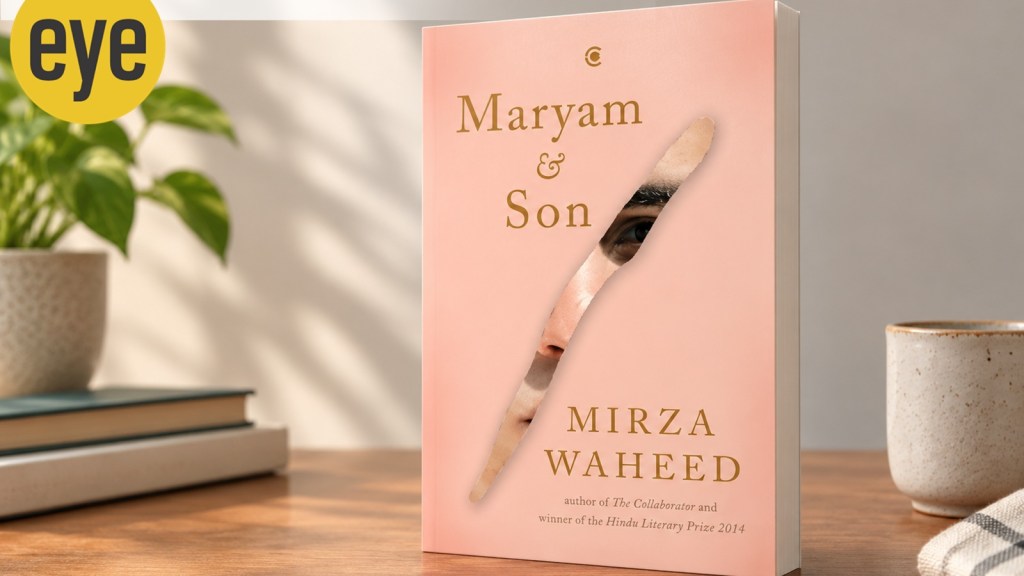
Mirza Waheed’s Maryam & Son.Mirza Waheed’s Maryam & Son. (Generated using AI)

Months into her 20-year-old son’s disappearance on a random Tuesday morning, Maryam implores one of the officers in charge of her son Dilawar’s case, to shift his gaze. She has been pleading for assistance but has been met only with suspicion and surveillance by the London authorities who started investigating her son — and in some ways, Maryam — for connections to the Islamic State. She asks the officer, “Do you know what it means to have a missing son? Do you know what a knock on the door does to me?”

This frames the central tension in Mirza Waheed’s Maryam & Son. A mother who doesn’t know how to grieve her son, Maryam is surrounded by people who offer her shrugged indifference at best and accusation at worst; the world seems to be closing in on her, and there is little she can do about it. With that premise, in the painful in-between that Maryam’s life has become, Waheed makes readers confront the price of innocence denied, trust stolen, and grief poisoned, or more to the point, of racial profiling, state surveillance and imperial policy.

While placed firmly inside the home, the book has everything to do with the politics of today. It tells the story of an impact: When otherness, stereotypes and impunity for the powerful converge, the fallout for the othered can be catastrophic. Contemporary European politics is obsessed with the Muslim immigrant and her assumed crimes, fuelling a machinery that discriminates at home and invades outside. At a time when domestic politics in the West is consumed by such rhetoric and headlines announce the arrival of Western forces and funding in foreign countries, Maryam’s story comes as a plea, a window into the homes such politics and policies seek to overtake and destroy.

In an interview, Waheed said that these characters “have every right to be normal”. But do they? Even before Dilly goes missing, the reader can see the compromises he and his family make as immigrants and the vilified religious minority: What they allow themselves to say, think, expect, and how they negotiate their space even as they hold onto the belief that they belong. Maryam, who was brought to the UK as a baby, wonders at one point if her fate would have been different had she been born in the country.

Also at the centre of the novel is memory. Readers often experience the world Waheed has built through memories; they provide the context for loss and the fodder for doubt. Maryam starts soaking in nostalgia almost as a compulsive habit; she is caught between her past and present, struggling to spot how she missed this about her son. The book is an exercise in holding your breath, yearning and praying. In execution, though, the story slows too much at several points. Sometimes, the repetition of the mundane fails to serve its function.

But in this tale that reads as a mother’s nightmare coming to life, there are also flashes of levity, helmed by affection, familiarity and community. The characters carry themselves in all the complexity they deserve; you can see in them and their relationships tea-time conversations with your own parents, aunts, children, sisters. Because the mundane is felt so viscerally, so is the grief of their extraordinary circumstances.

But Maryam does much more than grieve her son and her husband, whom she lost years ago. She finds herself. Surrounded by her sisters, who often hold her up, she rediscovers the pleasures of being more than the mother, and explores the freedom of being left behind by the men in her life. She tries out idle trolls in the park, lingerie, and romance.

Story continues below this ad

Her relationship with Julian Chapman, the family liaison assigned to her son’s case, has a constant tussle with trust even as it embodies comfort for both parties. In many ways, it reflects the relationship between a faithful immigrant and a suspicious state. Ultimately, as the title suggests, Maryam & Son is not about those Maryam grieves; it’s about her.

In the aftermath, dealing with tragedy and loss, facing endless possibilities, we leave Maryam in a place of hope: of a new life, of a new door, and of a new feeling when someone knocks on it. For readers condemned to live in and around the tragedies of the non-fiction world of today, that hope can be a saving grace.

Sukhmani Malik is a journalist and sub-editor at The Indian Express, working at the National Editorial and Opinion section. Her work largely focuses on queer rights, gender identity, digital culture, technology, healthcare and literary criticism. Professional Focus Sukhmani often explores how personal identity intersects with larger political and digital landscapes. Her reporting beats include: Transgender and Queer Rights: She frequently reports on legal battles, workplace discrimination, and the socio-economic status of India’s queer community. Digital Culture, Fandom and Technology: She analyses the psychological impact of the internet, Gen Z slang, and the evolution of global fandoms. She also closely watches developments in tech and space. Books and Pop Culture: She provides sharp reviews of contemporary fiction and analyses the political undercurrents of global media icons. Politics and Conflict: She writes about and analyses global politics and trends in the space, with a focus on conflict zones. Recent Notable Articles (Late 2024-2025) Her recent work highlights a blend of social advocacy and sharp cultural commentary: 1. Gender & Rights Advocacy “If I hadn’t been forced to quit, I would have earned lakhs by now” (November 12, 2025): A profile of Jane Kaushik, a trans woman school teacher who took her fight against workplace discrimination to the Supreme Court. “Harry Potter reboot: How J.K. Rowling’s continued anti-trans activism spurred boycott call” (October 17, 2025). “From J.K. Rowling to Congress Manifesto: Where is India’s queer voter?” (April 6, 2024). 2. Digital Trends & Internet Culture “‘Brain rot’ is how Gen Z deals with the chaotic world it inherited” (December 3, 2024): An analysis of the Oxford Word of the Year and its reflection of a generation's surreal disengagement. “Why Liam Payne’s death is also an occasion to mourn the end of a heady era of online fandom” (October 19, 2024). “Why Taylor Swift is the perfect PR progressive for the Kamala Harris campaign” (September 18, 2024). “The City and I: Sleepless in cyberspace” (October 11, 2024): A personal reflection on the paradox of feeling disconnected despite being constantly online. “Reading Elon Musk’s tweets: A ‘cool’ billionaire can’t fix free speech” (November 4, 2022) 3. Literary Reviews & Culture “Chetan Bhagat’s 12 Years review: Tone-deaf take on love and age-gap relationships” (October 25, 2025). “‘Weapons’, ‘Sinners’, and the rise of absurdist horror in a broken world” (September 15, 2025) “At World Book Fair, a clash of ideologies and a celebration of the republic” (February 7, 2025): A report on the regional language sections and the dominance of religious literature. “Alina Gufran’s No Place to Call My Own churns the stomach, but it’s impossible to look away” (March 8, 2025). 4. Politics & Democracy “Trump’s inauguration was a spectacle of Pure White America – brace up for more” (January 22, 2025): A critical perspective on the 2025 US inauguration and its implications for democratic values. “Charlie Kirk assassination: How Trump’s free speech politics deepens America’s democratic crisis” (September 26, 2025). “Reading Joe Sacco’s ‘Palestine’ in 2023: What happens to the war when you look away?” (December 26, 2023) ... Read More


Advertisement
Loading Recommendations...
Advertisement
Advertisement
Latest Comment
Post Comment
Read Comments