


- Tags:
- Booker prize
- books
- literature
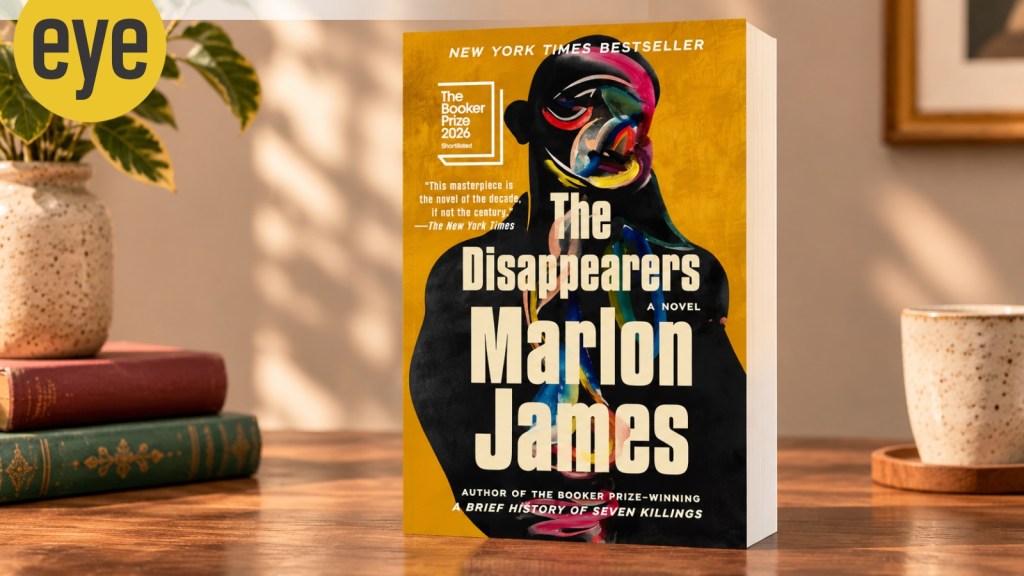 Marlon James’s The Disappearers
 is a no-holds-barred take on brutality and it is not an easy read. There is little room for respite as James moves between memory and the present to investigate the social conditions that produce violence and the histories that sustain it. The Dissapearers is a tour de force nevertheless. Its intensity is not merely stylistic. James seems intent on making the reader experience, rather than simply be an observer to, the psychic exhaustion of dehumanisation.
From The Book of Night Women (2009), his searing account of slavery and rebellion in Jamaica, to A Brief History of Seven Killings (2014), the polyphonic work that revisited the attempted assassination of Bob Marley and the violence that engulfed Jamaica in the 1970s, James’s fiction has explored power, oppression and the complicated ways in which the marginalised negotiate their histories. In The Disappearers, he turns his attention to queer life in Jamaica in the two decades after the late 1980s – it’s a society where homosexuality is stigmatised, AIDS is feared, and gay men are forced to negotiate a precarious existence.
The book begins on a note of anticipation. In Kingston in 1988, eight amateur artists, all strangers from different social backgrounds, have come together to rehearse John Herbert’s Fortune and Men’s Eyes, a play set in a men’s prison that explores sexuality, power and exploitation.
The production is directed by Havelock Titus, an Oxford-educated Jamaican who has returned home after years abroad. Among the cast are Edmond Porteous, or Eddy, an 18-year-old university student from a relatively privileged family; Jordan Brown, sharp-tongued and intelligent, struggling to survive after being rejected by his family; Matt Chin, a handsome and enigmatic advertising professional who attracts Eddy’s attention; and Orrin Turner, whose flamboyance conceals considerable insecurity.
The rehearsals offer the artists a temporary community in which they can be themselves, without the constant need to satisfy society. But the joie de vivre is shortlived. The gathering is brutally attacked: One member of the troupe is killed, another blinded, and the survivors left with serious injuries and scars – identities and sexual orientations change. The threat of more homophobia looms, and the disappearance of several members of the theatrical circle becomes central to the plot.
Eddy survives, and with Jordan, becomes pivotal to the search for the missing men. The 18-year-old is haunted by survivor’s guilt, while Jordan’s flamboyance, sexual confidence and abrasive humour appear to be forms of resistance, but they also conceal wounds he cannot easily confront.
View this post on Instagram
Havelock’s story adds another dimension. Through letters to a friend, the novel moves back into his past, including his years at Oxford, where his sexuality made him vulnerable to the condescension and exploitation of privileged men. His formal English, wit and genteel behaviour owe as much to his passage through elite circles as to the carefully cultivated persona in which refinement becomes a response of sorts to humiliation.
At the same time, Havelock is neither a conventional mentor nor a moral authority. An early AIDS patient, he is assailed by his memories of England as well as the regret of having fled the scene of the attack, leaving his cast to the mob’s mercy. His elegance and withdrawn nature cannot entirely shield Havelock from his demons.
For the assault’s perpetrators – among them, a reggae singer, a religious preacher, a police officer and even a gay man — homophobia is virtually a self-sustaining moral universe, in which cruelty is justified by the very prejudices that generate it.
Does the emotional force of The Disappearers then exemplify the Nietzschean aphorism about the abyss — “If you gaze long into the abyss, the abyss gazes back at you”? James’s restless prose mirrors the unsettled consciousness of people struggling to make sense of their lives. As he moves between diaries, interviews, letters, and shifting perspectives, the reader must forsake the comfort of a conventional narrative.
The Disappearers is not a neat story of victimhood and recovery. At the same time, James doesn’t descend into Nietzschean fatalism. His characters are angry, vain, ambitious, contradictory, but also capable of tenderness and introspection. The novel’s tragedy lies in the ways they struggle to earmark their own identities from the trauma that has overtaken their lives.
James offers no redemption. Self-reflection, even compassion, does not erase suffering. The effort to feel the pain of colleagues, instead, becomes a means to reclaim humanity – a fragile one, albeit.