4 min readNew DelhiJul 7, 2023 06:47 PM IST
First published on: Jul 6, 2023 at 06:25 PM IST
Kashmir’s history is replete with broken promises, shattered dreams and fractured ties, the cumulative result of which is a loss of a sense of identity. The author of Rooh, actor-director Manav Kaul, an exiled Kashmiri Pandit, grapples with the question of identity whenever someone asks him about Kashmir. Kaul had never directly confronted Kashmir in his writings as it would have brought on a deluge of unaddressed agonising memories, until he wrote Rooh. But it seeped into his stories, books and plays nonetheless. “I do write about Kashmir, it lies scattered in whatever I write,” he writes in the novel.
As a Kashmiri Pandit who was ‘plucked away’ from what he calls home, ‘the white walls and blue door’ in Khwaja Bagh, Baramulla, and being ‘thrown away’ to a village in Madhya Pradesh, one would expect the book to be full of ghastly details of estrangement and injustice. But what we come across throughout the 176 pages of the novel instead is a deep longing for ‘home’, an innate affection for the place, and vignettes from his childhood — lying in Baby Aunty’s lap, playing with Kaka, doting on Titli, watching the ‘blue sky and white clouds’ from the window of his home, etc. There’s no blame-game, no complaints, no pent-up rage, just doubts and a quest to come to terms with unanswered questions, the most prominent among them being the one he repeatedly asked his father after coming to Hoshangabad from the Valley — when will we return to Kashmir?

The novel, originally published in Hindi last year and translated by Pooja Priyamvada, toggles between being a travelogue and a memoir. The poignancy of being called an ‘outsider’ everywhere he went becomes palpable when the protagonist talks about his experiences in Hoshangabad where he was discriminated against by other children for being a fair-skinned boy with Kashmiri features. The only endeavour of Kaul and his brother was to shed off every bit of the ‘Kashmiriyat’ they have, even if it meant not taking baths for weeks just to fit in. “Wherever I saw dirt, dust and mud, I would leap at it,” the author writes. The compromises that the writer made as a child with his Kashmiri identity would haunt him in his adulthood as he would “struggle to collect the lived portraits of his childhood ” in Kashmir.
Throughout the novel, the memories of Kashmir and that of the protagonist’s father are so entwined that it almost feels that, to him, his father is synonymous with Kashmir. “Sometimes I think I wanted to write about my father and I wrote about Kashmir, and when I sat down to write about Kashmir, I saw my father,” he writes. How do the repercussions of being uprooted from one’s own land creep into each and every experience of a person’s life is evident when Kaul shares his father’s ordeals after being “chased away” from the Valley.
The novelty of this book lies in its persistent efforts to portray the humane side of the people left behind instead of demonising them. Some instances about his encounter with local people feel like a warm hug — the writer’s stay at Shabeer’s home with his family; his rides with Mushtaq; a worker at a houseboat, Basheer, who knew exactly when to bring ‘noon chai’ and ‘lavas’ to the author; and Gul Mohammed, who like a parental figure, insisted on driving Kaul to Gulmarg. However, the chapter in which he met Baby Aunty ends too soon, leaving us craving for more.
Published by Penguin Random House India, the stream-of-consciousness novel is as much about the writer’s experiences in Kashmir as about his internal conflicts in facing his past, coming to terms with his father’s death and accepting the reality that the ‘blue door and white walls’ of his Khwaja Bagh home are no longer there. What is left is just rubble. “Maybe now I will dream of rubble,” he writes. In that sense, through this book, Kaul not only takes a physical journey back to the Valley but also a metaphorical one.

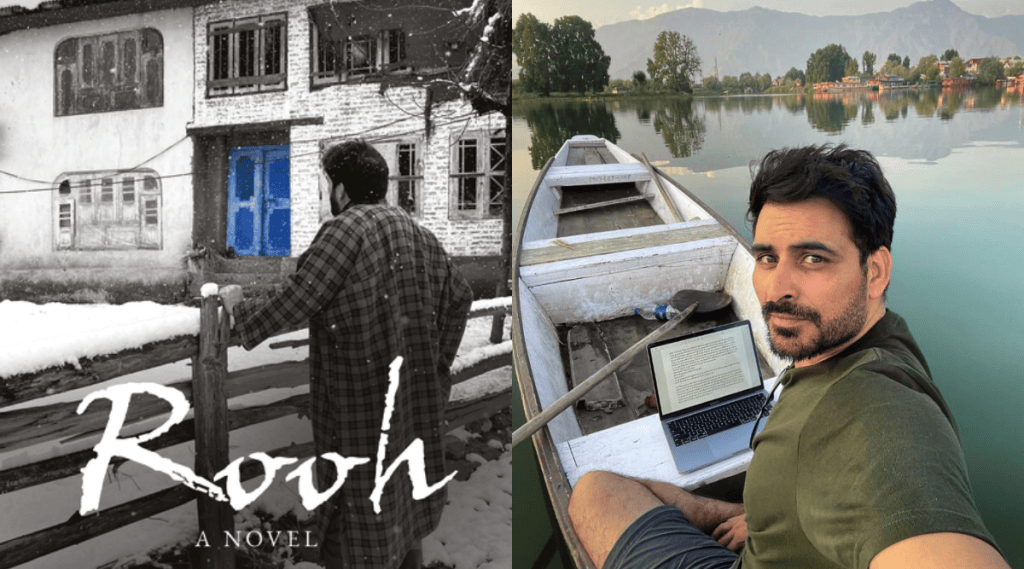 Throughout the novel, the memories of Kashmir and that of the protagonist's father are so entwined that it almost feels that, to him, his father is synonymous with Kashmir. (Photo: Instagram/Manav Kaul)


 Share


