
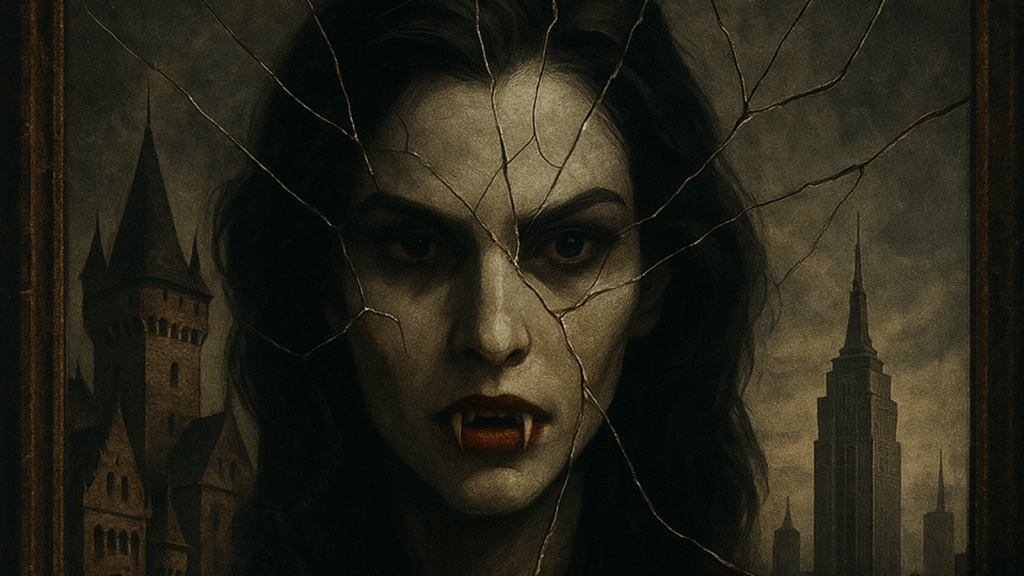
For two centuries, the vampire has been a constant presence in popular culture – on the page and on the screen – reinventing itself with every age and inspiring new fanged subcultures that defy anyone who dares to dismiss it as a relic of a bygone era.
The latest incarnation arrives in V E Schwab’s Bury Our Bones in the Midnight Soil (2025), a furious novel in which women find freedom by trading mortality for monstrosity. Schwab’s vampires are not cursed, depraved creatures of the night. Their transformation does not damn them; rather, it gives them much-needed agency and autonomy.

It’s a long way from Transylvania’s shadowy castles to Schwab’s feminist gothic, but the journey tells us everything about the vampire’s endurance and metamorphosis. From medieval horror to Romantic metaphor, from Stoker’s Victorian repression to Rice’s existential confession, the vampire has been literature’s most enduring survivor — always dying, but never truly gone.
The Prince of Blood
 A portrait of Vlad III (c. 1560), on whom some scholars believe the Dracula myth is fashioned after. (Wikimedia Commons)
To follow the vampire’s trail is to blur the line between myth and memory, discovering that its origins lie as much in history as in imagination. The legend’s roots reach back to the mid-15th century, to the blood-soaked reign of Vlad III of Wallachia—better known as Vlad the Impaler. A warlord and tactician, Vlad ruled his corner of Eastern Europe with ruthless efficiency, holding back the advance of the Ottoman Empire through sheer terror. Contemporary chroniclers tell of entire forests of impaled bodies lining the roads to his stronghold, a grotesque warning to enemies and subjects alike. His sobriquet, Drăculea—“son of the dragon”—derived from his father’s membership in the Order of the Dragon, a knightly society sworn to defend Christendom. In time, Drăculea would be anglicized into a name that still chills the imagination: Dracula.
Four centuries later, Bram Stoker found that name in an obscure history of Transylvania and transformed it. He took the tyrant’s legend and turned it inside out. The stake that once executed sinners became the stake that saved souls. Stoker’s Dracula recast medieval horror as moral allegory.
Stoker’s dark invention
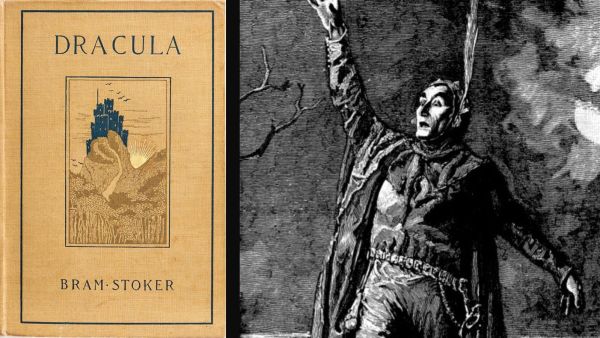 Henry Irving is widely considered to have inspired Dracula. (Wikimedia Commons)
When Dracula appeared in 1897, the British Empire was at its most confident, and its most anxious. Science and empire had promised mastery, but beneath that optimism lurked fears of contagion, degeneration, and moral decay. Into that breach glided Count Dracula, a foreign aristocrat who feeds on English virtue.
Stoker stitched his creation from many traditions: the Eastern European revenant, the Byronic villain, the erotic anxieties of the fin de siècle. Stoker used previous English vampire narratives, the conventions of the gothic novel, Eastern European folklore and history, and travel accounts.
Told through letters and journals, Dracula feels modern because it is built like reportage — a Victorian thriller in documentary form. Its blood transfusions and typewriters are as essential to the drama as crucifixes and garlic. The novel made vampirism a metaphor for the unspoken: sex, disease, race, and Empire.
As critic James Twitchell later wrote, “The vampire does such terrible things in such a gentlemanly manner.”
The Vampire Myth
In Stoker’s England, where desire was both denied and omnipresent, the Count’s bite became a metaphor for the forbidden . The vampire’s victims are seduced before they are destroyed and their corruption feels perilously like awakening. Yet Dracula was only the culmination of a century’s fascination. Long before Stoker, the Romantic poets had already discovered the vampire’s metaphorical potential. Byron, Coleridge, and Keats saw in the creature a symbol of creative parasitism — the artist who feeds on emotion, the lover who drains what he adores. In this light, vampirism was not a curse but a condition of art itself.
Twitchell, writing in the 1980s, gave that intuition psychological depth. In The Vampire Myth, he argued that the figure stages a Freudian drama of forbidden intimacy. The act is erotic but displaced, a fantasy of closeness without consequence, death without finality.
Folklore added another inversion: the female vampire who bites back. From Le Fanu’s Carmilla (1872) to silent-film sirens like Theda Bara, the lamia offered a counter-fantasy of female desire, which explored the pleasure and danger of autonomy. In literature’s long negotiation with sex, the vampire became its most supple metaphor.
From Gothic to existential
In Anne Rice’s Interview with the Vampire (1976), the creature finally confesses. Rice’s immortal narrators, weary and eloquent, grapple with meaning. Her vampires love, mourn, and moralise. They are queer, philosophical, self-loathing — products of the post-Vietnam and post-Watergate world, where evil felt systemic and salvation uncertain.
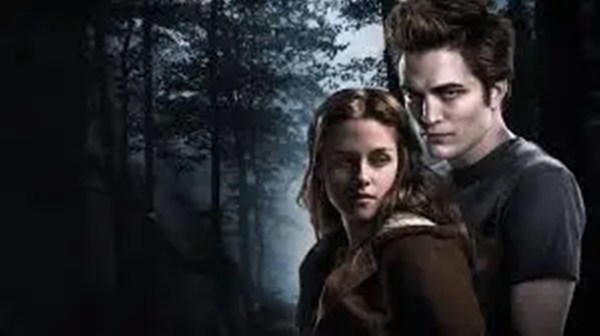 Stephenie Meyer’s Twilight made the vampire popular among teenagers.
By giving her monsters souls, Rice made them mirrors of modern disillusionment. Her books queered the myth and democratised it. The vampire was no longer a European count but a cultural citizen, who was sensual, self-aware, burdened by history.The transformation continued into the late 20th century. On film and television, vampires evolved from predators to protagonists, from Bela Lugosi’s hypnotic menace to the tormented romantics of Buffy the Vampire Slayer and Stephenie Meyer’s Twilight. If Rice gave the vampire a conscience, Twilight gave it teenage angst, polishing the fangs for the age of mass-market desire.
Feminist Rebirth
Today’s vampire fiction inherits all that history but wields it differently. In V E Schwab’s novel, the bite is no longer violation. Her women turn to vampirism out of choice. This feminist reclamation aligns with a broader literary movement that includes Angela Carter’s The Bloody Chamber (1979) and Octavia Butler’s Fledgling (2005). Each reclaims the gothic for those once devoured by it. In these retellings, the vampire is not a metaphor for male desire but for female autonomy.
As Dracula scholar Elizabeth Miller notes, the myth persists because “both filmmakers and audiences are aware of the history and conventions of the genre and are willing to participate in their adaptation.” The vampire feeds on the past, but never passively. It revises every myth it inherits.
The long life of the undead
Across six centuries, from Vlad’s stakes to Schwab’s sisterhood, the vampire has been less a monster than a method. It is a way of thinking about transgression, temptation, and transformation. It endures because it evolves, drinking deeply from each era’s anxieties and desires.
In Stoker’s time, it embodied repression, in Rice’s, alienation; and in ours, liberation. It has served as aristocrat, addict, lover, outsider, feminist, and survivor.
Perhaps, the essence of immortality is not eternal life, but infinite reinvention. The vampire is literature’s most enduring mirror, reflecting back whatever we fear, crave, or cannot yet name.
As the scholar of Dracula wrote over a century after its publication, “When we watch a contemporary vampire film or read its adaptation, we are witnessing a variation on an ancient and honorable theme — the confrontation between good and evil.” The difference now is that we are no longer certain which side we are on.


 Share


