2 min read
© IE Online Media Services Pvt Ltd



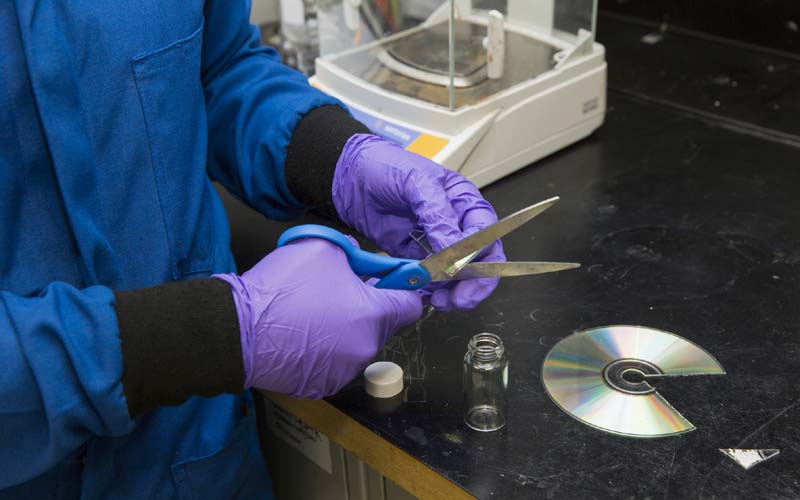 IBM Researcher Jamie Garcia cuts up old CDs for recycling. (Image credit: IBM Research)
Research scientists with IBM have discovered a recycling process to help convert old smartphones and CDs into non-toxic, high-strength plastics.
According to a press statement by IBM, every year the world generates more than 2.7 million tons of a plastic, known as polycarbonates, to create common household items, such as CDs, baby bottles, eyeglass lenses and smartphones. Over time, polycarbonates decompose and leach BPA, a chemical which potentially damaging effects on the brain.
Now IBM scientsits from the company’s Almaden lab in San Jose, California, have discovered a new, one-step chemical process that converts polycarbonates into plastics safe for water purification, fiber optics and medical equipment.
[related-post]
In the study, IBM Researchers added a fluoride reactant and heat to old CDs to create this new plastic. The new plastic has temperature and chemical resistance superior to the original substance.
“Polycarbonates are common plastics in our society – especially in consumer electronics in the form of LED screens, smartphones and Blu-rays, as well as everyday eyeglass lenses, kitchen utensils and household storage gear,” said Gavin O Jones, PhD, research staff member, IBM Research – Almaden (San Jose, Calif.).
“We now have a new way of recycling to improve how this prominent substance impacts the world’s health and environment,” he added.
“While preventing these plastics from entering landfills, we simultaneously recycle the substance into a new type of plastic — safe and strong enough for purifying our water and producing medical equipment,” said Jeanette Garcia, PhD, research staff member, IBM Research. “It’s an environmental win on many fronts.”
The full research paper, One-step Conversion of Polycarbonates into Value-added Polyaryl ethersulfones, was published in the peer-reviewed journal, Proceedings of the National Academy of Sciences of the United States of America. Read the full paper here.