7 min read

Journalism of Courage



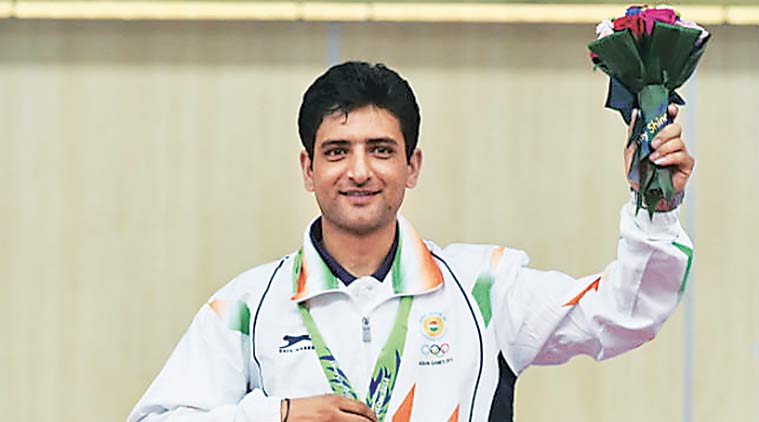 In 2009, Chain Singh won the junior nationals in his favoured 50 metre rifle 3 positions event. (Source: File)
The faint rustling of dry leaves on the ground drew alarm as the noise steadily grew louder, they remember. It was not an unheard of sound, especially on a clear and cool autumn night at Chansar village, in the Gandoh taluka of the Doda district in Jammu and Kashmir. The crunching of the yellowed leaves, crushed underfoot, would generally be passed off as a stray animal making its way through the village – invariably requiring one to brandish a cane and chase away the wandering creature. But there was something unnerving about this new series of footsteps.
Its higher decibel hinted that it wasn’t solitary, it was moving more rapidly, and was relatively synchronised. And there, under the light bounced off by the moon and that of a billion stars, the stricken villagers watched from their windows as a group of around 25 tall men, all clad in black – complete with identical facemasks – walked right through the centre of the village. The residents dared not question the intruders, lest the outsiders decided to use the menacing AK-47s they made no attempt of concealing.
“Terrorists walking right through the village… This was what Chain Singh grew up in,” says the Olympic-bound shooter’s younger brother Surender, recalling every detail – even the moonlight – told to the pair when they grew up.
Now 23, Surender remembers hearing the story of the ‘menacing 25’ several times over, first from his grandfather, then from various members in the village. “This was back in 1995 when insurgency was at its peak,” he tells. It was also this very incident that he claims introduced the government-aided Village Defence Committee (VDC) into Chansar. “Essentially, eight members were a part of the committee, and each was provided with a weapon to use, should terrorists threaten us.”
Chain eventually became one of those members years later. “I was just 15 then. The gun they gave me was quite heavy, about seven kilograms. I was quite scared of the sound it made, so I used to run off whenever I heard it anywhere,” the 27-year-old recalls. Far from being a trigger-happy, gun-wielding macho teen, Chain says the sound of firing and shells was a very unpleasant noise. ‘‘It would be, for any child.’’

Villagers being handed over guns however, wasn’t an unheard of proposition. Chain remembers hearing about nearby villages receiving their ration of weapons and ammunition from as early as 1990 – another period of high militancy in the Doda region that sits less than 200 km from the border. Surender, in turn explains how the geography of their home supported the rationale behind setting up the VCD. “Doda is one of the most rural and underdeveloped areas, which makes it susceptible to a lot of militant activity,” he says. “For example, from our village to the closest road, you have to walk 13 kilometres. You have to walk that distance because it isn’t even a proper path for vehicles. Be it school, shopping, visits to a hospital, you have to walk that stretch. Similarly, defence forces would take time to come up if there was trouble.”
In 2008, Chain walked those 13 km to head off to the army. There he would replace his fear for firing the 3-mark rifle with a prowess of handling a Blacker sports rifle. A year later, he won the junior nationals in his favoured 50 metre rifle 3 positions event. “Fauj vaali shooting mein nazar tez thi, toh maine pakad liya,” he says.
The win propelled his stature, and the once gun-scared cricket-lover had now been pegged as a prodigy in the art of sport shooting. Yet his transition to the senior level was less fruitful. His bright and early start in the sport was replaced by a streak of mediocrity. The competitors he once overwhelmed steadily overtook him. “Everything was bad. I flopped. So I had to work extra hard to get back into shape, and the scores slowly started picking up,” he recalls.
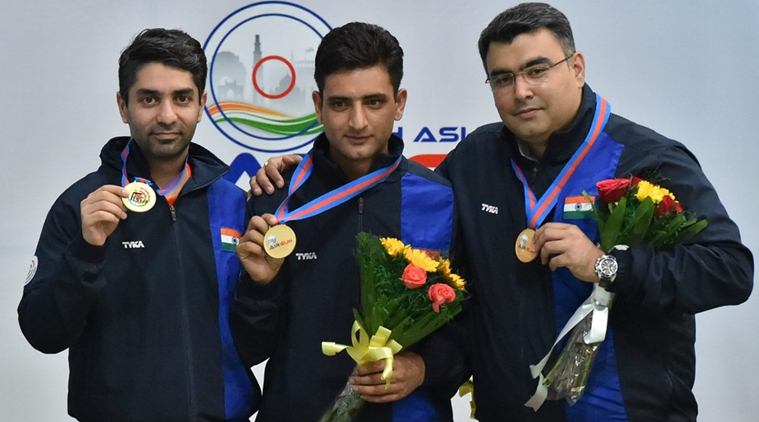
At the 2014 Asian Games in Incheon, his bronze medal win finally announced his arrival on the international circuit. Following that were his gold medal winning performances at the International Shooting Competition of Hannover (ISCH) in May 2015, and just three months later, he booked his spot for Rio at the Gabala World Cup.
In the shooting world, Chain had already begun making waves. But at home, there was confusion about the nature of his occupation. “When they heard that Chain was shooting at the Asian Games, they thought ‘Asian Games’ was the name of an upcoming Bollywood movie, and Chain was ‘shooting’ or acting, for that,” Surender laughs. “It took me a long time to explain the reality of it because people here don’t know what sport shooting is.”
There isn’t much of a buzz surrounding the upcoming Olympics either. “As much as people would like to enjoy sport, there are bigger things that we have to worry about,” Surender says. Militancy is rising again in Doda, and despite Chansar’s obscure location on a map, its mobile connectivity issues, the minute population and the harsh winters complete with heavy snowfall repels unwanted activity, there is always a fear.
So much so that when Chain had to surrender his VDC gun when he joined the army, there was a slight sense of panic in the village. “One gun short means one more level of protection lost. So the villagers were quite anxious for the officials to appoint a new commander to take possession of the gun,” Surender says. “We don’t want to use the gun. But if it’s there, it just keeps people calm because they feel like they have something to defend themselves with,” he adds.
Chain might have felt the same way too had he not become the first person in the village to join the army. “My classmates at school wanted to join the army. So I decided to join too,” Chain says. Yet Surender asserts it was more to it than just peer pressure.
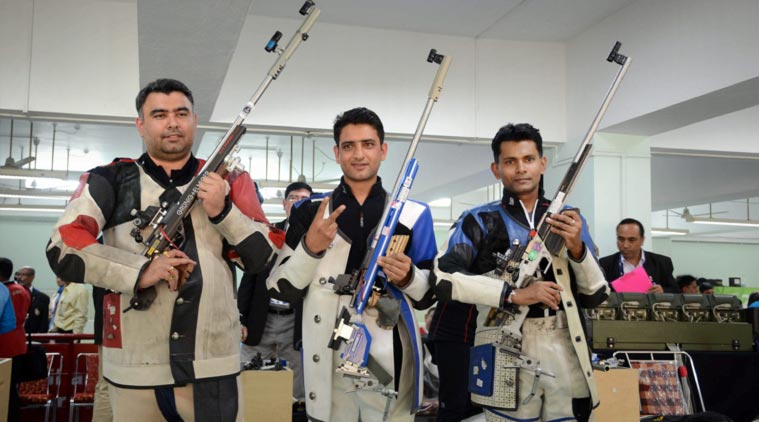 Armymen often visit Chansar to ask about the village’s well-being and inquire if there’s been any militancy activity noticed by the residents. “The fact that you had these tall, muscular and uniformed men walk those 13 km to meet us made us feel safe,” he recalls. “But I don’t have any doubts that Chain wanted to be seen as a saviour to his village, just as the army men were seen as during those visits.”
Fate had a different route for the Naik Subedar of the 13th J&K Regiment. Surender remembers, back when he was 15, walking 13 km uphill after school and finding Chain at the door, with a smile radiating all 32-teeth, holding a letter announcing his selection into the army.
The younger brother does fear, however, that Chain’s achievements might go unnoticed in the village. Yet he knows that whatever the outcome at Rio, the fact that one of Chansar’s favourite sons is a part of the army, the village of 60 households will see Chain as their saviour.