
Opinion As fears of global yellow fever epidemic grow, India has never seen a case: could that change?
There is no cure for yellow fever. Treatment is symptomatic, aimed at reducing the symptoms for the comfort of the patient. Vaccination is the most important preventive measure against yellow fever.





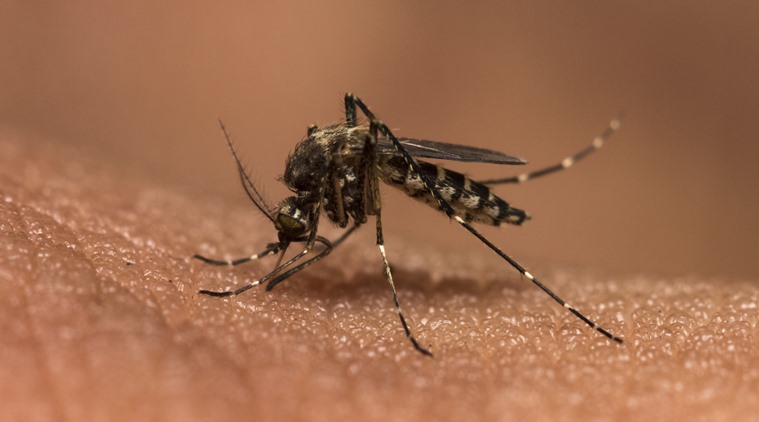 Yellow fever is an acute viral haemorrhagic disease transmitted by infected mosquitoes. The “yellow” in the name refers to the jaundice that affects some patients.
India is highly vulnerable to yellow fever in view of a highly susceptible population and the abundance of mosquito vector – Aedes aegypti. Despite the presence of arbo-viral diseases like Dengue, Japanese Encephalitis, West Nile Fever, Kyasanur Forest Disease and Chikungunya, experts at the National Institute of Virology and Indian Council of Medical Research find it intriguing that there has not been a single case for decades now in the country.
This is important as there is currently the fear of a global epidemic with the vaccine running low on supplies. The Guardian reported on Tuesday: ‘A last-ditch effort to prevent yellow fever spreading through Kinshasa in the Democratic Republic of the Congo and potentially developing into a global epidemic is to be launched using vaccines containing a fifth of the normal dose because the global stockpile is so low’.

According to WHO, yellow fever is an acute viral haemorrhagic disease transmitted by infected mosquitoes. The “yellow” in the name refers to the jaundice that affects some patients. Up to 50 per cent of severely affected persons without treatment will die from yellow fever. The virus is endemic in tropical areas of Africa and Latin America, with a combined population of over 900 million people. The yellow fever virus is an arbo-virus of the flavi-virus genus, and the mosquito is the primary vector. It carries the virus from one host to another, primarily between monkeys, from monkeys to humans, and from person to person. There is no cure for yellow fever. Treatment is symptomatic, aimed at reducing the symptoms for the comfort of the patient. Vaccination is the most important preventive measure against yellow fever. The vaccine is safe, affordable and highly effective, and appears to provide protection for 30–35 years or more.
The Aedes Aegypti has been there for ages but there have been no yellow fever cases in India. The virus was introduced here, NIV experts said. “There has not been a single case so far,” according to Dr Soumya Swaminathan, Director General of ICMR, adding that the alert however is on. “Surveillance measures are underway especially as there has been an outbreak of yellow fever in central Africa that has now spread to People’s Republic of China. We cannot be complacent,” she added.
As many as 4,000 suspected cases of yellow fever in Angola and more than 2,200 in Democratic Republic of Congo DRC, with around 400 reported deaths in the two countries, mostly in Angola are being reported. The first cases of yellow fever were detected in December 2015 and confirmed in January and the WHO is coordinating 56 global partners to vaccinate more than 14 million people against yellow fever in more than 8,000 locations. The decision to give people one-fifth of the normal dose of vaccine – known as fractional dosing – was taken by WHO’s strategic advisory group of experts on immunization.
Watch Video: What’s making news
“Protecting as many people as possible is at the heart of this strategy. With a limited supply we need to use these vaccines very carefully,” said William Perea, coordinator for the control of epidemic diseases unit at WHO in a statement here. Apart from DRC, Angola, now Kenya and the People’s Republic of China have confirmed yellow fever cases which highlight the risk of international spread through non-immunized travellers.
Seven countries (Brazil, Chad, Colombia, Ghana, Guinea, Peru and Uganda) are currently reporting yellow fever outbreaks or sporadic cases not linked to the Angolan outbreak.
The surprising and sudden reporting of yellow fever cases raises alarm about the long term threats of yellow fever. While African continent reported 47 cases and 6 mortalities in year 2008 and 20 cases and 3 mortalities in year 2009, the Americas reported 102 cases and 42 mortalities in year 2008 and 55 cases and 18 mortalities in year 2009 as per reports of World Health Organisation. Although the number of cases officially reported by World Health Organisation in January 2011 for the year 2008 and 2009 in Africas and Americas were negligible, but there are an estimated 200,000 cases and 30,000 deaths worldwide each year..
In the National Journal of Community Medicine `Yellow fever- the challenges ahead in India’, experts Mohan Joshi, Raghvendra Gumashta and others from the N K P Salve Institute of Medical Sciences and Research Centre at Nagpur explain that they had looked into the threat of a possible silent introduction of yellow fever virus into India and studied the various probable responsible factors, situations and circumstances alongwith ways and means of ensuring adequate prevention-cum control measures in case of any inadvertent identified presence of this virus in the Indian territories.
A strategic policy initiative is the answer to address the critical issues, the researchers have said as the dense population in India can contribute to the high morbidity and mortality (case fatality rates being as high as 50 percent in virgin areas) in case yellow fever is introduced.
Travellers may wrongly consider yellow fever an “extinct” disease, and may not obtain accurate information about the risk of infection. At the Ministry of Health and Family Welfare a strict quality control of YF vaccination process is being maintained with 27 designated Yellow Fever Vaccination Centers and all the International travellers arriving in India within 6 days of departure from any yellow fever endemic country being directed to possess (in original) a valid yellow ever certificate of vaccination or prophylaxis as per the model released by WHO from a yellow fever vaccination centre designated by the country. Any passenger arriving in India from any yellow fever endemic country without a valid yellow fever vaccination prophylaxis certificate in the original, will be treated as suspects of carrying the yellow fever virus in their body and will be quarantined, the guidelines have said.
Any passenger who wants to visit yellow fever endemic countries should be advised to take YF vaccination even though they may return to India within 6 day because they need to produce the yellow fever certificate of vaccination on their arrival in India to avoid enforcement of quarantine procedures/regulations

 Share
Share


