5 min read
Stay updated with the latest - Click here to follow us on Instagram

Journalism of Courage



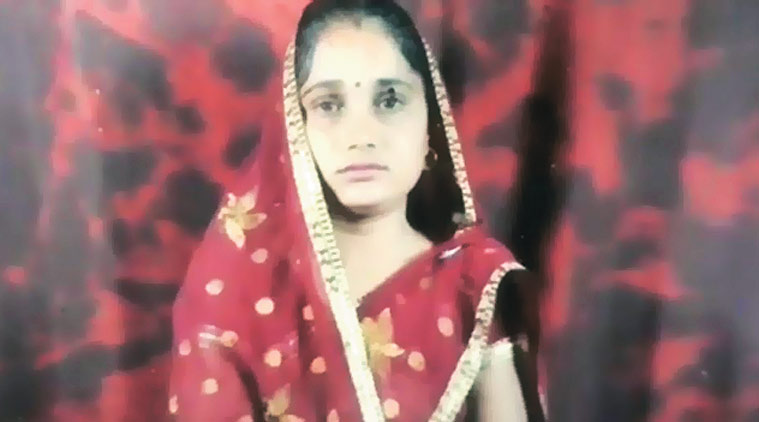 “Usha Devi earned most of the family’s income by working at a plastic factory. The family has lost its breadwinner,” says Mohan Chauhan, elder brother of Devi’s husband Mukesh, who works as a daily-wage labourer.
INSIDE A small, nondescript house in Rajasthan’s Alwar district, the 15-year-old girl stares blankly at the mourners walking in through the doorway every few minutes to ask about the death of her mother Usha Devi. A group of veiled women huddled near the courtyard are wailing while the men seated outside speak in low, hurried voices.
“Devi earned most of the family’s income by working at a plastic factory. The family has lost its breadwinner,” says Mohan Chauhan, elder brother of Devi’s husband Mukesh, who works as a daily-wage labourer.
On March 15, in full public view near NH-8 at Shahjahanpur in Alwar, the 33-year-old Devi, a mother of two children, was hacked to death allegedly by her husband’s uncle Mamraj Singh, 62. According to police, Singh killed Devi because he felt that a woman who works is “going against Rajput pride”.
Over the weekend, relatives and neighbours at Devi’s house say that since she’d never been to school, all she wanted was for her children — Tanuja and her 10-year-old brother Dheeraj — to study, get good jobs. They say that to achieve this dream, she followed a gruelling routine that started well before dawn.
“She used to wake up before 5 am and go out to collect firewood so that she could prepare food for her children to take to school. Around 8 am, she would leave for the plastic factory and return only after 6 pm,” says Devi’s elder sister Beena.
 Usha Devi husband Mukesh, his brother Mohan. (Photo: Deep Mukherjee)
According to her family, Devi earned around Rs 7,000, which saw her family scrape through every month. At times, her salary was supplemented by her husband’s income.
“Around 4-5 months ago, my uncle tried to stop my wife from going to work and she beat him with her sandal… I had roughed him up, too. But we never thought he would kill her. I had warned her once after I saw him following her,” says Mukesh.
For residents of Shahjahanpur, the sight of Singh roaming the streets aimlessly was familiar. “He left his house a long time ago and spent his years in Haryana where his wife died. They didn’t have any children. We were told that he was of questionable character. Most of us avoided him,” says Sheela, Singh’s sister.
Singh was nabbed by police early on March 16 from the hillocks nearby, where he was hiding after the murder, and is now in judicial custody. Police have also recovered the murder weapon, a sword that Singh claimed to be a family heirloom.
“Singh lived near Bhiwani for many years. Preliminary investigation suggests that he had planned the attack and there were also several instances earlier when he had followed Devi,” says Surendra Malik, station house officer, Shahjahanpur police station.
Police say Singh hasn’t shown any trace of guilt. “He said that he committed the murder because it is against Rajput pride for women to work. What is even more shameful is the fact that the murder was committed in a public place but nobody helped the victim,” says Malik.
The site of the murder is just a few yards from a bustling highway, amidst automobile shops and tea stalls. Shopkeepers and local residents say they didn’t see the killing because the market is closed every 15th.
Police say Devi was on her way to the plastic factory when Singh attacked her from behind. “She was committed to her work and was also of gentle nature,” says Gajraj, an employee of the factory.
Back inside Devi’s house, green curtains hang over the door, and the interiors are clean. “She managed to do all the household chores along with her work at the factory. The house would always be clean, and she was constantly trying to make the best out of limited resources,” says Shyam Singh, a relative.
At the mention of Devi’s name, her daughter walks to the other room and lies down on the bed, motionless.
“That man (Singh) didn’t have any money and did odd jobs but yet would talk about Rajput pride and how women shouldn’t work,” says Devi’s father Omveer Tanwar. “I lost my daughter because of this belief.”
Stay updated with the latest - Click here to follow us on Instagram