2 min read
Stay updated with the latest - Click here to follow us on Instagram

Journalism of Courage



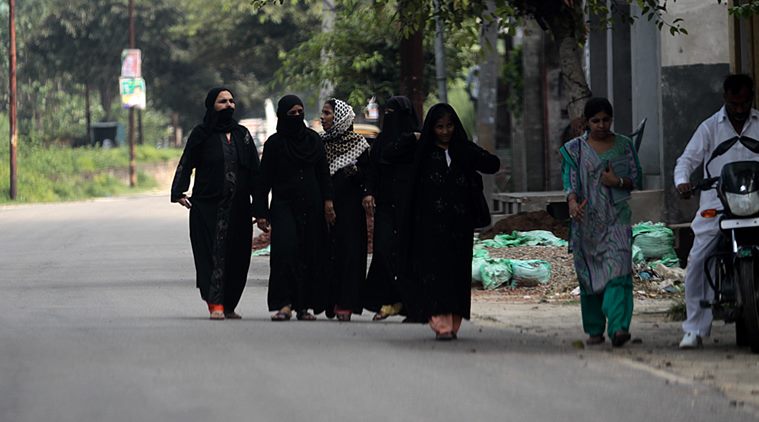 Representational imaga. Express Photo
The Supreme Court on Thursday referred the triple talaq issue to the constitution bench. The hearing in the case will begin on May 11. Attorney General Mukul Rohatgi plea to hear the case before the summer vacation was rejected by the apex court. A five-member bench will be constituted by the top court to hear the matter. A bench comprising Chief Justice J S Khehar and Justice D Y Chandrachud said the petitions challenging the validity of triple talaq, ‘nikah halala’ and polygamy practiced by Muslims will be head by the larger bench during the summer vacation.
The controversial divorce practice involves the husband repeating the word “talaq” three times. The Supreme Court will be hearing a clutch of petitions demanding a ban on the practice. Earlier, the All India Muslim Personal Law Board (AIMPLB) opposed the petitions, claiming that it would infringe their religious beliefs. The said the petitions were not maintainable as the issues do not fall under the ambit of judiciary. According to news agency ANI, the practice has been abolished by many Muslim-majority countries such as Pakistan and Indonesia.
Last year, the Centre had opposed in the Supreme Court the practice of triple talaq, ‘nikah halala’ and polygamy among Muslims. The Ministry of Law and Justice, in its affidavit, had referred to constitutional principles like gender equality, secularism, international covenants, religious practices and marital law prevalent in various Islamic countries to drive home the point that the practice of triple talaq and polygamy needed to be adjudicated upon afresh by the apex court. The apex court had taken suo motu cognizance of the question whether Muslim women faced gender discrimination in the event of divorce or due to other marriages of their husband.
with PTI inputs
Stay updated with the latest - Click here to follow us on Instagram