4 min read
Stay updated with the latest - Click here to follow us on Instagram

Journalism of Courage



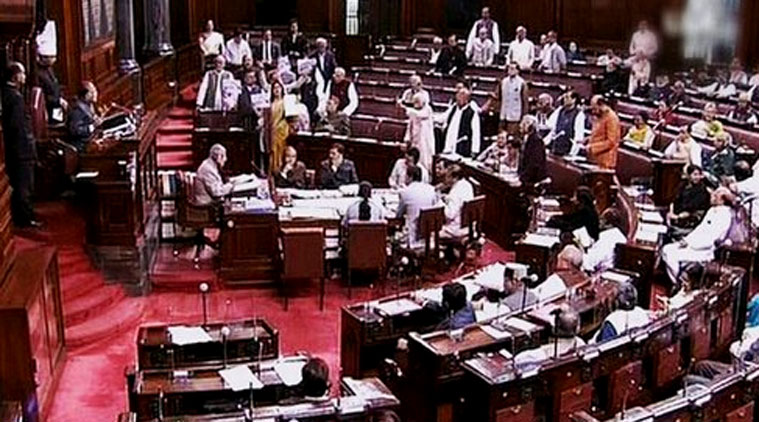 The Rajya Sabha gave its consent to Mines and Mineral (Development and Regulation) Bill, and the Coal Mines (Special Provisions) Bill after voting.
The government managed to garner enough support in Rajya Sabha to pass two crucial legislation, meant to replace soon-to-lapse ordinances, on Friday, the last day of Parliament before its month-long recess.
The Rajya Sabha gave its consent to Mines and Mineral (Development and Regulation) Bill, and the Coal Mines (Special Provisions) Bill after voting.
The Congress and the Left parties voted against the two bills while the JD(U) walked.
[related-post]
In boost to govt plans, House clears coal, mining bills out during voting on the MMDR bill. The government managed to get the support of all other parties. The MMDR bill was passed with 117 votes in favour and 69 against. On the other bill, 107 members voted in favour and 62 against.
Both bills, which have already been passed by Lok Sabha where the government has a comfortable majority, had been sent to the select committee by Rajya Sabha last week after many members demanded a larger debate. The MMDR bill was passed in Rajya Sabha with one amendment, because of which it had to be sent to Lok Sabha again for approval.
Finance Minister Arun Jaitley said the government had overcome the politics of “obstructionism” of the Congress. “It is an important day for Indian democracy, Parliament and Indian economy, as the politics of obstructionism led by Congress failed today,” he said.
“…the sole purpose of the opposition led by Congress was to create obstruction in government functioning and the law-making process in Parliament… But the strength of Indian democracy and better sense of the country’s lawmakers has prevailed,” he said.
The Coal Mines (Special Provisions) Bill seeks to amend the Coal Mines Nationalisation Act 1973 by allowing private coal mining companies to sell coal in the open market. Until now, private companies were allocated coal mines only for ‘captive’ use, meant for consumption in their own power, cement or iron and steel industries. The bill also introduces several provisions to make auction of coal mines more transparent.
The MMDR amendment bill seeks to extend the provisions of the existing Act, which regulates the mining sector, to new minerals like bauxite, iron ore and limestone as notified minerals, and allows the government to award prospecting-cum-mining licence, instead of just the mining licence. The amendments will allow the government to increase the area of mining lease from the present 10 sq km limit, instead of granting a new licence.
The government had in the last few months promulgated several ordinances after it failed to push the corresponding bills in the winter session of Parliament in December due to lack of majority in Rajya Sabha. All except the one to amend the Right to Fair Compensation and Transparency in Land Acquisition, Rehabilitation and Resettlement Act of 2013, popularly known as the land acquisition law, have been passed in the current session. These included the Insurance Bill and the Motor Vehicles (Amendment) Bill.
The ordinance on land acquisition, the most contentious so far, is set to lapse on April 5, if not re-promulgated. Parliament will reconvene on April 20 after a month-long recess.
In another piece of important legislative business, the government introduced The Undisclosed Foreign Income and Assets (Imposition of Tax) Bill, 2015 in Lok Sabha, which seeks to bring in strict punishment for people hoarding black money abroad. The bill fulfills a promise made by the finance minister during his budget speech this year. Jaitley had announced the government’s intention to bring in a law that will make undisclosed income and assets abroad punishable by up to 10 years imprisonment, besides taxes and penalties.
“I hope, in the second part of the budget session, Parliament will hold a meaningful discussion on it,” Jaitley said.
Stay updated with the latest - Click here to follow us on Instagram