Journalism of Courage
 3 min read


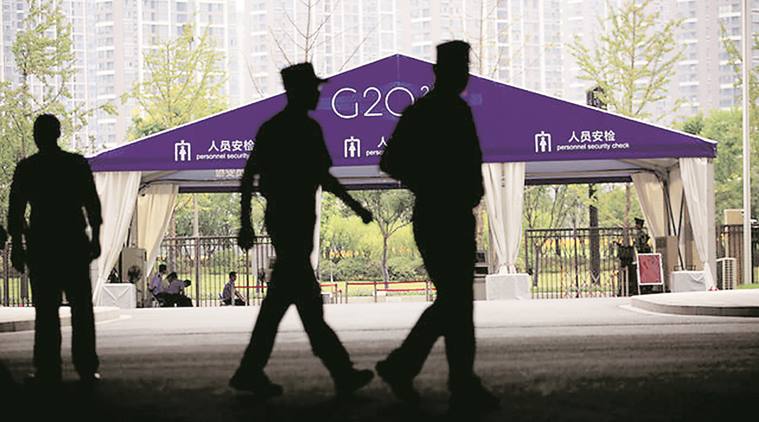 G20 Summit: India will oppose the proposals made by United States and China. (Source: Reuters photo)
INDIA will oppose two key proposals — one from the G20 Summit host China on setting up a research centre for information on corrupt persons and another from the United States on specifying a date for ending fossil fuel subsidies — at the Leaders Summit in Hangzhou from September 3-5.
Indian negotiators told The Indian Express that the United States had actually floated a non-paper last year that called upon all countries to agree to a ‘date certain’ on ending fuel subsidies. “We do not support it,” said a negotiator, who did not wish to be named, conceding there would be pressure even from China, given that it wants to also put a stamp by clinching this deal during its presidency.
“We are cutting fossil fuel subsidies in India, and we have done quite a bit. Today, there are no subsidies on petrol and diesel. In fact, these petroleum products are taxed significantly. Subsidies on cooking gas for the poor and supply of free electricity (power being produced mostly from coal-fired thermal plants) to farmers cannot be done away with,” the negotiator said.
Western countries support the United States on this proposal. “When US takes the lead, most others take the cue. In fact, Western countries are ahead of the US in setting the discourse on issues such as climate change. But Japan, after the Fukushima nuclear disaster, is keen on coal-based plants. It may not be opposed to ending fuel subsidies, but clearly it is pitching for clean coal-based fuel. We are also trying for technology transfer in this area,” an Indian government official said.
A deal on fossil fuels eluded the G20 too during a recent meeting of its energy ministers. The final communiqué after the meeting on June 29 in Beijing said the countries would endeavour to make further progress in rationalising and phasing out inefficient fossil fuel subsidies over the medium term.
India is also unsure about the China proposal to set up a research centre that would create a database on “persons sought for corruption and asset recovery”.
“Initially, the word used was ‘fugitives’, which was later replaced by ‘persons sought for corruption’,” said an Indian official. “China hasn’t so far shared much information about it, and suddenly even said an agreement has been reached by the working committee on this,” the official said.
New Delhi is of the view that G20, unlike other global institutions, is not a permanent establishment and does not even have a permanent secretariat. “China proposed to base the research centre in its country. We do not even know who would be the staffers; whether all of them would be Chinese nationals. So, we are circumspect. We are not sure if they would list people with whom India has good relationships in the database,” another person familiar with the negotiations said.
An Indian official said the government would certainly wait for more details on the China proposal. “Any set-up of this kind must have representation from other countries as well. We would ideally expect involvement of multiple countries in such an initiative,” the official said.