


 3 min read
Stay updated with the latest - Click here to follow us on Instagram

Journalism of Courage



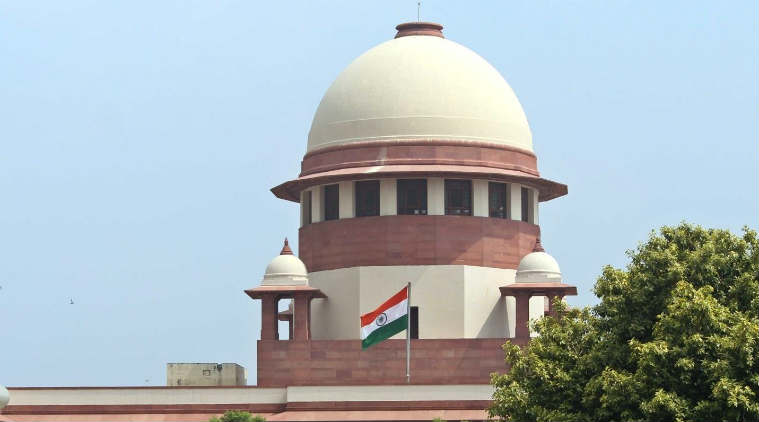 Supreme Court (Files)
The tussle between the Centre and the Arvind Kejriwal-led Delhi government over the powers of the Delhi Lieutenant Governor and the demand to allow euthanasia for terminally ill patients figure among five questions to be taken up by the Constitution Bench of the Supreme Court, starting October 10.
According to an official notice, “the matters which are to be heard by the Constitution bench consisting of five hon’ble judges will be listed with effect from Tuesday”.
In a setback to the Delhi government, the Delhi High Court had in August 2016 held the L-G as the administrative head of the National Capital Territory, which it said was still a union territory. The AAP government challenged this in the SC, contending that a “democratically elected government can’t be subservient to the L-G”.
A two-judge bench of the Court subsequently referred the matter to the five-judge Constitution bench, saying that important questions of law and Constitution were involved and needed to be decided.
The court will also take up the question of whether passive euthanasia can be provided to a terminally ill person with no chance of recovery. The matter was referred to a Constitution bench in February 2015 by a bench headed by the then Chief Justice of India P Sathasivam. The petition, filed by NGO Common Cause, had said that passive euthanasia must be extended to patients whose medical condition had reached a point of no return, so that their suffering can be lessened.
Passive euthanasia refers to not doing something that would preserve a patient’s life, while active euthanasia is about doing something to end a patient’s life.
A five-judge SC bench, headed by Justice J S Verma, had in the case of Gian Kaur vs State of Punjab in 1994 dealt with the subject of euthanasia, but did not arrive at any definitive conclusions on its validity. Subsequently, in the Aruna Shanbaug case in 2011, a two-judge bench of the apex court upheld the validity of passive euthanasia in exceptional circumstances and laid down an elaborate procedure for the same.
The conflicting views prompted the highest court to refer the matter to a Constitution Bench for final resolution.
The Constitution Bench will also deliberate on the powers of courts to refer to and reply on reports of Parliamentary Committees.
The question cropped up during the hearing of a petition which dealt with action taken by the Drugs Controller General of India and Indian Council of Medical Research regarding to approval of vaccine to treat cervical cancer among women. The vaccine was tested in Gujarat and Andhra Pradesh with government approval.
The reference to a Parliamentary Standing Committee report came up during the hearing, following which the question arose whether the apex court, while exercising its expansive powers under Article 136 or Article 32, can take cognizance of it and whether such reliance would breach Parliamentary privileges.
The other two issues to be taken up deal with matters of arbitration and insurance.
Stay updated with the latest - Click here to follow us on Instagram


